Unlit vs. Solar Address Signs: Nighttime Visibility and Positioning Guide
Should you stick with a traditional unlit address plaque or upgrade to an illuminated solar house number?
Unlit address signs fail beyond 15–20 feet after dark because vehicle headlights sweep far beneath upper house walls, creating blinding rear shadows rather than revealing numerals. Solar LED house numbers maintain legibility up to 150+ feet by producing active contrast. For maximum visibility, position solar address plaques 4 to 6 feet above ground level, perpendicular to oncoming street traffic.
Nighttime Sightline & Visibility Comparison Matrix
| Driving / Ambient Scenario | Unlit / Standard Plaque Failure Mode | Passive Reflective Sign Limit | Solar Lighted House Numbers (Active LED) | Optimal Mounting Adjustment |
| --- | --- | --- | --- | --- |
| Suburban Street (25 mph, 35 ft Setback) | Completely invisible; relies entirely on porch lights, which cast harsh downward shadows. | Reflects only when car headlights align directly (within a narrow 15° cone). | Clear, crisp warm LED visibility up to 150 ft with continuous 12-hour glow. | Mount 4.5 to 5.5 feet high on primary porch pillar or front garage wall. |
| Dark Rural Road (45 mph, Low Beams) | Driver passes home before numbers can be detected; zero contrast at speed. | Low-beam headlights drop off below 3 feet, missing higher wall placement. | Active light source draws eye 200+ feet ahead, granting 4.5 seconds driver reaction time. | Position at 4 feet elevation, angled 10° toward approaching traffic. |
| Off-Angle Driveway Approach (45° Angle) | Flush-mounted numbers become foreshortened and unreadable behind trim or siding. | Reflective backing loses micro-prismatic return beyond 20° off-axis. | 140° wide-angle LED dispersion keeps numbers visible across wide approaches. | Install on perpendicular entryway wall or standalone mailbox post. |
| Rain, Snow, or Dense Fog | Water drops scatter exterior porch light, rendering dark numbers indistinct blobs. | Water droplets distort reflective sheets, reducing legibility distance by 70%. | IP44 waterproof acrylic/PC casing maintains sharp character contrast through precipitation. | Ensure surface is unobstructed by overhanging gutters or snow accumulation zones. |
| Deep Porch Shadows / Recessed Alcove | Overhangs create complete darkness; porch light silhouetting masks character faces. | Ambient shadow prevents light entry, rendering passive retroreflection useless. | Self-powered 600mAh battery delivers independent illumination regardless of ambient shade. | Position on outer wall edge receiving direct sky exposure for daytime solar charging. |
Passive reflective and unlit plaques suffer catastrophic visibility failure when subject to headlight cutoffs, weather distortion, and off-angle driver approaches. The matrix below illustrates how active solar LED illumination overcomes these failure modes across common nighttime scenarios.
Trade-Off Analysis: Passive Unlit Plaques vs. Active Solar Lighted House Numbers
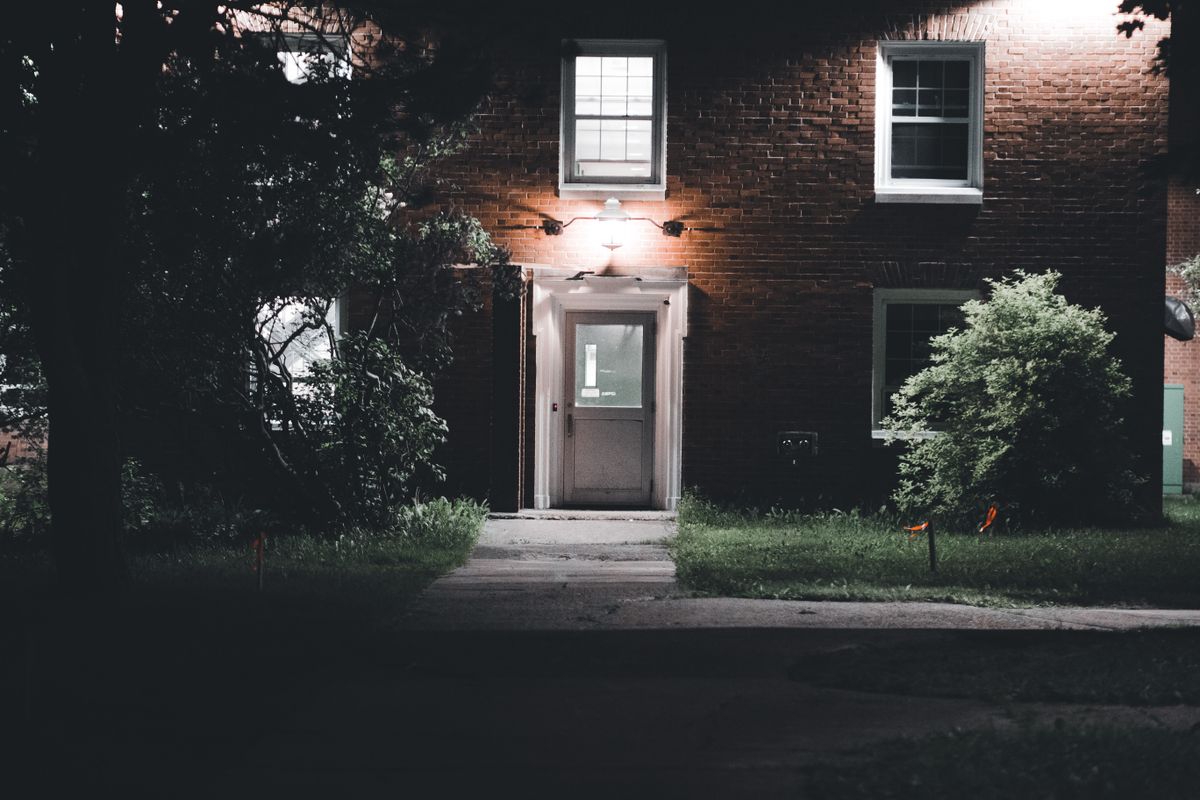
Photo by Erik Mclean on Pexels
Pros
- Active Warm LED Illumination: Provides self-generated contrast readable up to 150+ feet without relying on car headlights.
- Zero Operating Cost & Easy Wiring-Free Install: Integrated solar panels power a 600mAh NI-MH battery with no electrical trenching.
- Automatic Dusk-to-Dawn Light Sensor: Turns on automatically at night and off during the day, yielding up to 12 hours of light after 6–8 hours of sunlight.
- All-Weather IP44 Waterproofing: Durable ABS & PC construction withstands rain, heavy snow, and harsh UV exposure.
- Requires Sunlight Access: Needs an unshaded mounting location receiving 6–8 hours of daytime daylight to maintain peak 12-hour runtime.
- Battery Maintenance: Internal 600mAh NI-MH battery requires periodic solar recharge and ultimate replacement after 2–3 years of heavy cycling.
- Fixed Mounting Height Sensitivity: Must be installed strictly within the 4 to 6-foot vertical elevation band to avoid tree overhang shade.
Expert Field Tip: The Low-Beam Headlight Cutoff Rule
Vehicle low-beam headlights are mechanically angled downward to strike the road surface 30 to 50 feet ahead of the bumper, rarely illuminating objects higher than 3.5 feet off the ground at typical residential driveway distances. If you mount an unlit house sign at standard eye level (5 to 6 feet high), oncoming headlights will pass entirely beneath it.
To bridge this vision gap without mounting your sign down near the mud zone, you must use an active light source. An illuminated solar house number plaque projects its own optical contrast, making mounting height a driver eye-level decision (4 to 6 feet) rather than a headlight beam restriction.
Visual Positioning Spec: Nighttime Sightline Cone & Elevation Guide
This diagram illustrates driver sightline angles, headlight cutoff geometries, and the sweet spot elevation range for mounting solar house numbers.
Summary Checklist: Critical Address Sign Visibility Rules
- Mount height must strictly measure 4 to 6 feet above ground level to align with human driver eye level.
- Unlit numbers fail beyond 20 feet after dark due to headlight sweep angles; active LED illumination extends legibility to 150+ feet.
- Solar address plaques require 6 to 8 hours of ambient daytime light to power their internal 600mAh NI-MH battery for 12 hours of illumination.
- Choose high-contrast black-and-white casing with warm LED lights to eliminate halo glare and silhouetting.
- Select durable IP44 waterproof ABS & PC enclosures to prevent internal fogging, corrosion, and UV yellowing.
Decision Framework: Which Address Sign Solution Fits Your Property?
For properties with setbacks exceeding 20 feet, or streets without bright overhead municipal lights, active solar illuminated address plaques are necessary to ensure rapid identification by delivery drivers and emergency personnel.
Best choice for
- Solar Lighted House Numbers — Active warm LED lighting provides sharp character contrast that penetrates low-light shadows across long front lawns.
- Solar Lighted House Numbers — Integrated dusk-to-dawn sensors automatically activate 12-hour continuous lighting without requiring costly outdoor hardwiring.
- Avoid unlit or passive metal plaques if your front entrance is recessed under deep roof eaves or blocked by porch pillars.
- Avoid hardwired electric address signs if you do not have pre-existing low-voltage wiring running to your street wall or porch.
- Hardwired Low-Voltage Lighted Signs — Provides constant power but requires professional electrician installation, wall drilling, and wire trenching.
Featured High-Visibility Solution
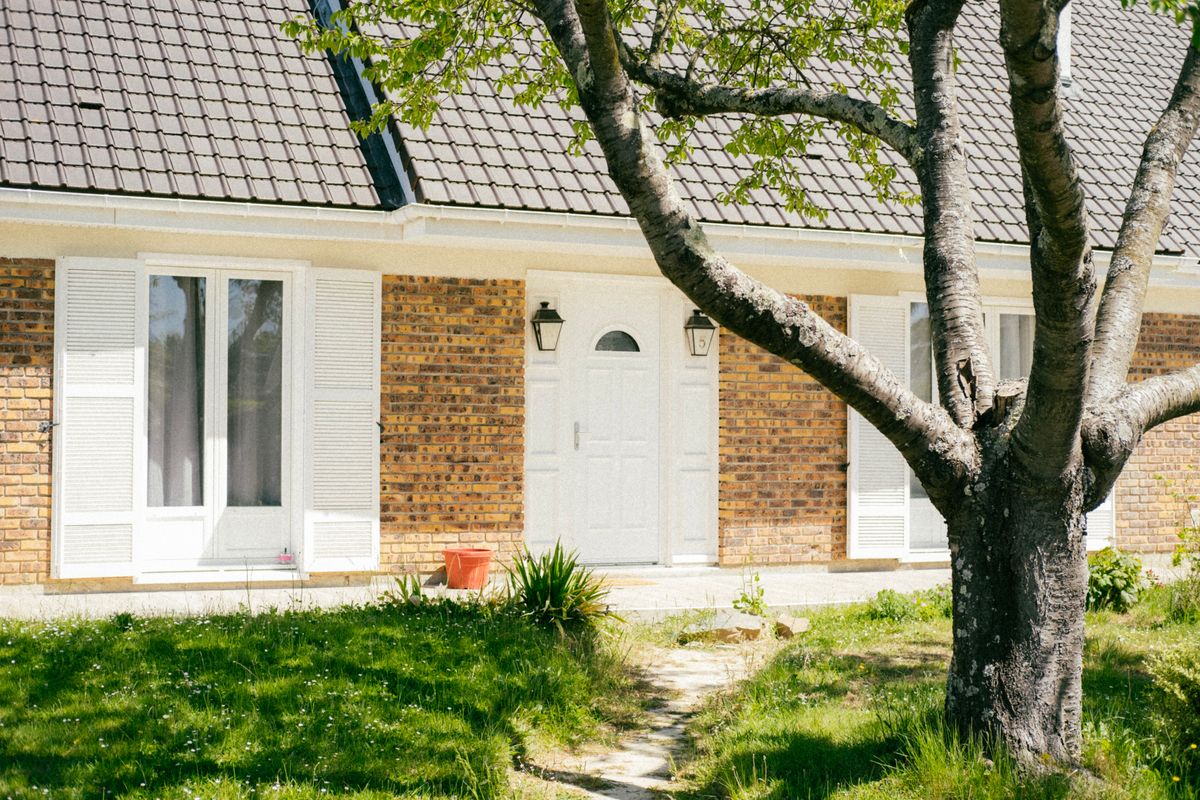
Photo by Mathias Reding on Pexels
Eliminate nighttime delivery errors and ensure emergency service access with modern, energy-efficient solar house signage.
Real-World Visibility Failure Scenarios & Solutions
Scenario 1: The Porch Light Shadow Box — Homeowners often mount unlit numbers directly underneath a decorative porch sconce. When turned on, the bulb illuminates the top edge of the numbers while casting the numeral faces into deep shadow. Solution: Replace the passive plaque with a self-illuminated solar house number mounted on an adjacent pillar at 5 feet height, separating your address visibility from porch sconce shadows.
Scenario 2: The Fast-Approach Suburban Curve — Vehicles traveling at 30 mph cover 44 feet per second. Unlit numbers mounted flush against the front door give drivers less than 1 second to read the digits once their headlights sweep past. Solution: Mount a solar address plaque angled 15 degrees toward oncoming traffic on the front wall edge or garage corner to maximize driver approach reaction time.
Scenario 3: Winter Precipitation & Fog Distortion — Heavy rain and snow scatter headlight beams, rendering passive reflective address numbers blurry and unreadable from the curb. Solution: Install an IP44 waterproof solar address sign featuring active warm LED backlighting and high-contrast black numerals on a white diffusers to maintain optical clarity through severe weather.
Analyzing how typical residential entrance configurations cause unlit numbers to fail, and how strategic solar placement resolves them.
Visual acuity decreases rapidly as ambient light drops. For a moving driver to perceive, read, and interpret a four-digit address number, the contrast ratio between the numeral digit and its background must exceed 70%. Traditional unlit house numbers—such as cast iron digits screwed into brick or painted wood—rely entirely on ambient street lighting or specular reflection from passing vehicle headlights.
Why Passive Reflectivity Fails
Passive reflective plaques utilize retroreflective sheeting or glass microbeads designed to bounce light back toward its source. However, retroreflection depends strictly on the entrance angle of the light beam. When an emergency vehicle or food delivery driver approaches a home from a 30-degree or 45-degree offset, the incident light from their headlights bounces off at an equal opposite angle, entirely missing the driver's line of sight.Furthermore, vehicle headlights are mounted lower than the eye level of truck and SUV drivers, creating a geometric disparity known as the observation angle. Because retroreflective material directs light back to the headlight housing rather than up to the driver's eyes, passive signs appear dim and washed out.
The Active Solar LED Advantage
Active LED illumination solves the observation angle problem by functioning as a primary light emitter rather than a reflector. By casting 360-degree diffused warm light from behind or through character cutouts, solar address plaques create uniform contrast independent of vehicle headlight angles.Modern solar illuminated signs combine several engineering components to ensure round-the-clock reliability:
Calculating Minimum Character Height and Placement Setbacks
A practical rule for outdoor signage legibility is 1 inch of character height for every 30 feet of viewing distance. For standard 4-inch address numerals:- Maximum Legibility Distance: 120 feet under ideal daytime conditions.
- Nighttime Unlit Legibility: Dropping to under 20 feet due to low contrast.
- Nighttime Active LED Legibility: Maintaining the full 120+ feet range thanks to high-contrast warm illumination.
Frequently Asked Questions
Common questions regarding solar address plaque performance, weatherproofing, and placement height.
Next Steps: Upgrade Your Curb Visibility
Your decision: Choose active solar LED illumination over unlit plaques if your entrance is over 20 feet from the curb or lacks direct, dedicated spotlighting.
Do this next: Measure your front wall height and street setback distance. Select a location 4 to 6 feet above ground level with direct southern or unshaded exposure for daytime solar charging.
Related resource: Address Visibility Standards FAQ: Distance, Angle, and Alignment for Emergency & Delivery AccessSolar Lighted House Numbers (Black & White Modern Warm LED)
Take action today to ensure your property is visible to visitors, couriers, and first responders after dark.
Related Placement & Mounting Guides
Provide logical internal links to surface-specific and charging optimization guides.