Solar Address Sign Placement FAQ: How Much Direct Sunlight Do You Really Need?
This solar address sign placement FAQ answers how much direct sunlight you really need: enough open sky for the panel to throw a sharp shadow most of the day, not a porch that merely looks bright. Solar house numbers with a 600mAh NI-MH battery charge in real sun. Bright shade, deep eaves, and winter north walls are not enough, which is why mailbox and yard mounts exist.
What "really need" means
How much direct sunlight do you really need? As much unobstructed sky as the lot can give the panel, especially in the season with the shortest days. This FAQ will not invent a hour count that is not in the product specs. The practical test is the hand-shadow test at mid-morning and mid-afternoon. No sharp shadow, not enough sunlight.
Direct sunlight is a beam, not a glow. A white soffit can look blazing and still starve the cell. Placement FAQ rule: put the solar address sign where a sundial would work.
IP44 ratings handle rain in that same exposed spot. You do not protect the plaque from the sun it needs. You buy outdoor ABS and PC and let it charge.
Placement answers that change the sunlight math
Photo by suzukii xingfu on Pexels
A wall under a porch really needs a different mount. A mailbox in the open often has more direct sunlight than the door. A yard post can be walked into the beam. Glow stickers need no sunlight and provide no dusk-to-dawn LED. Hardwired lights need no sunlight and need a circuit.
Sunlight need by mount and type
| Placement or type | How much direct sunlight | FAQ verdict | | --- | --- | --- | | South/west wall, shallow eave | Most of the day's sky | Usually enough | | Deep porch | Little direct sunlight | Not enough | | Mailbox in open | High | Often the better answer | | Yard post | High if not under trees | Strong | | Glow stickers | None needed | Not a solar sign | | Hardwired light | None needed | Different product |
Solar address sign placement is the FAQ: how much direct sunlight you really need is "enough to charge," proven by shadow, not by hope.
Placement, visibility, and install checklist
- [ ] Hand-shadow test at 10 a.m. and 3 p.m.
- [ ] Repeat in the low-sun season, not only in June.
- [ ] Choose wall, mailbox, or yard based on that test.
- [ ] Keep trees and flags off the panel.
- [ ] Clean glass so "enough sunlight" actually reaches the cell.
- [ ] Aim numerals to the street from about 50 feet.
- [ ] Aim the sensor at true night, not a lantern.
- [ ] Use positioning paper when you commit to the sunny patch.
- [ ] Do not "fix" low sun with indoor charging gimmicks.
Frequently asked questions
How much direct sunlight do solar house numbers really need?
Enough for a sharp shadow on the panel for most of the day. This placement FAQ uses that test instead of a made-up hour number.
Is morning sun enough?
Helpful, not always enough in winter. More open sky is better than a single golden hour.
Can reflected light replace direct sunlight?
Not reliably. Bright shade is why address signs die on porches.
Do I really need to move a summer-perfect wall in December?
If the winter test fails, yes. How much sunlight you need is seasonal.
Will a bigger plaque need more sun?
The 600mAh NI-MH battery still needs a clean panel in the sky. Size of the digits is a visibility issue; charge is a sky issue.
Related reading
- how solar address signs charge in cloudy weather
- guide to yard visibility
- how to install LED solar house numbers for wall
- solar vs wired house numbers
What to do next
Do the shadow test on your current placement. If you cannot prove direct sunlight, you already know how much you really need — more than that wall has. Move the solar address sign to a mailbox or yard post that lives in the sky.
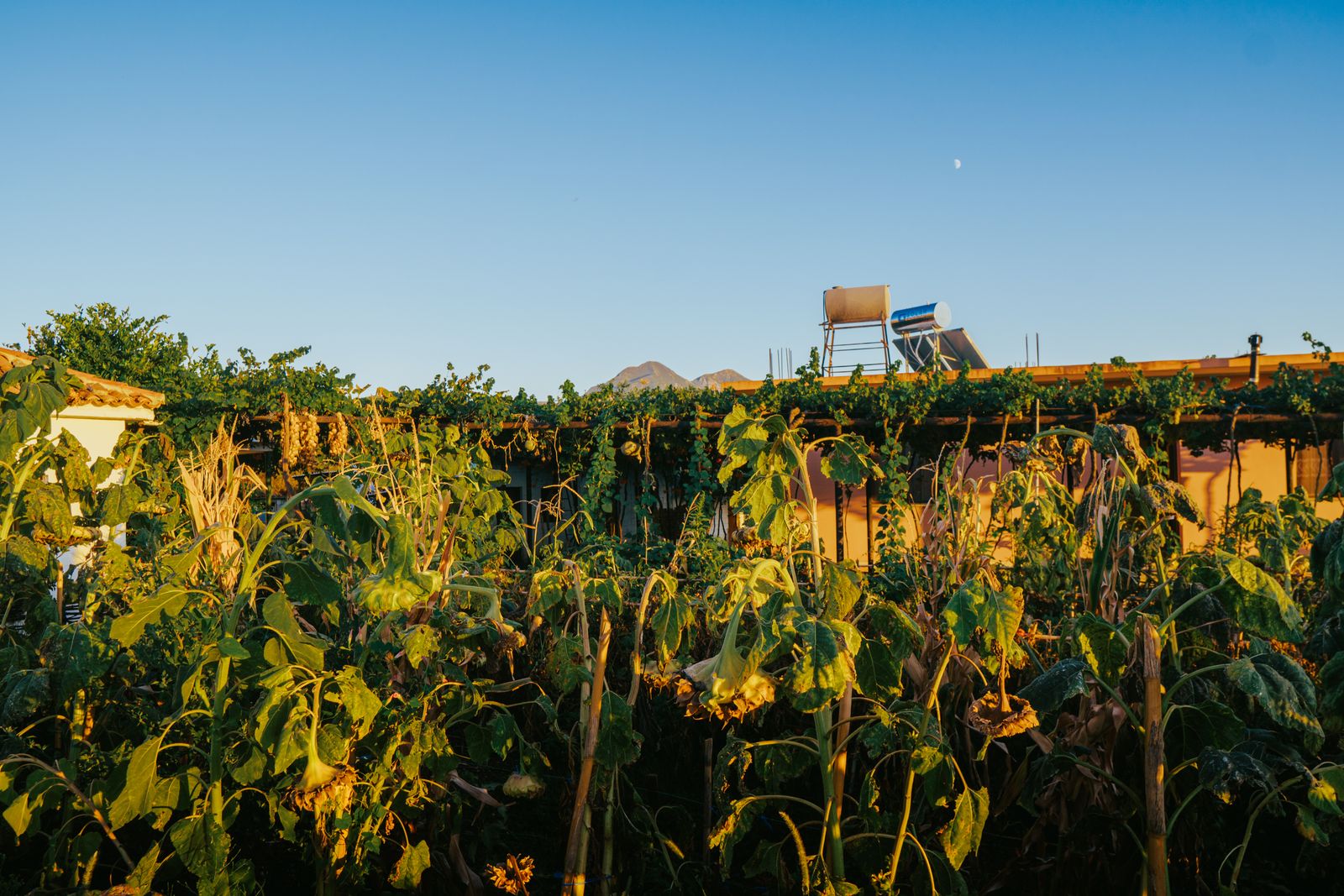
Cover photo by Artūras Kokorevas on Pexels.