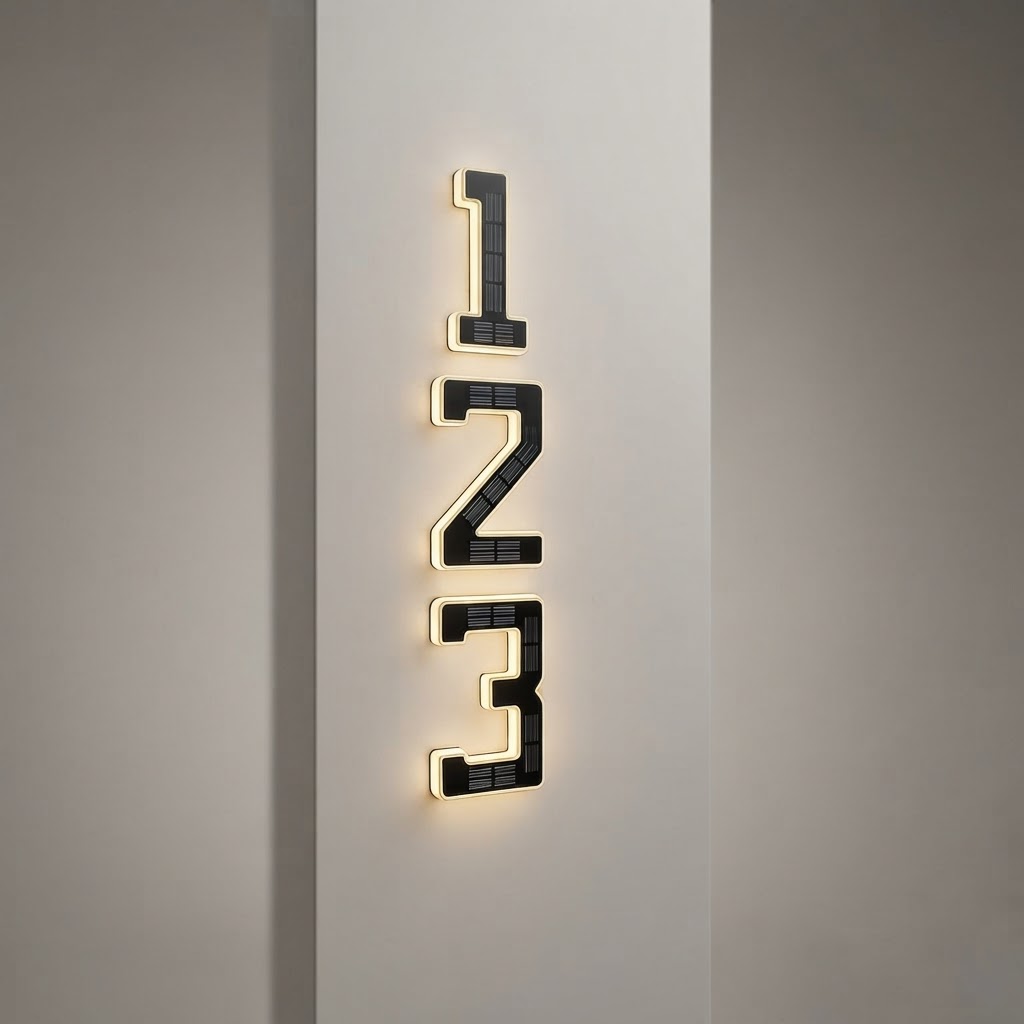
Solar vs. Hardwired Address Lights: Which Is Right for Your Home?
Installation Cost and Complexity Comparison
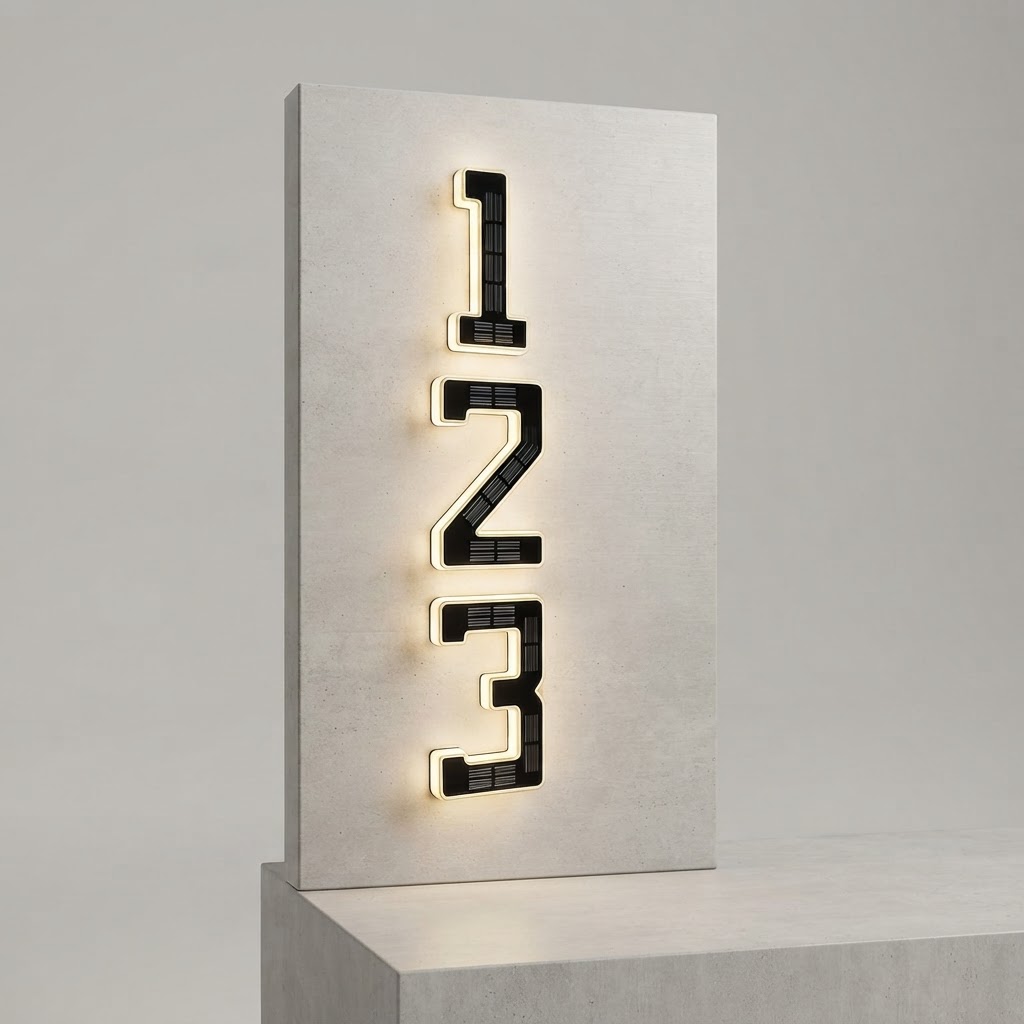
When selecting illuminated house numbers, homeowners must choose between hardwired electrical units and solar-powered alternatives. Hardwired address plaques usually require running electrical cable through exterior walls, often requiring professional installation costs ranging from $$0 (DIY) to $$0 (DIY).
In contrast, solar house numbers offer zero ongoing energy costs and an estimated installation cost of $0 (DIY). Equipped with included screws and positioning paper, solar units mount easily to any exterior surface without pulling wires or connecting to household circuits. Reviewing installation criteria in [the main guide] helps determine which structure fits your home best. The gap between the two is really about permission and disruption rather than the price of the fixture itself. A hardwired exterior light means drilling through the wall, running cable, and connecting into a household circuit. In most jurisdictions that is notifiable electrical work, which means an electrician, a certificate, and a booking, and it means making good the wall afterwards. A solar unit involves four screws and a screwdriver.
That difference decides the question outright for two groups. Renters cannot make a mains alteration to a property they do not own, but can mount and later remove a screw-fixed plaque. And anyone wanting the number on a gatepost, a boundary wall, or a detached fence has no realistic wired option at all, because there is nothing to run a cable to.
The wired route earns its cost in one situation: where the fixture must be bright, on all night, every night, regardless of weather, and there is already a circuit nearby. That is a specification a battery cannot match, and it is the honest case for wiring.
Operating Efficiency and Power Sources
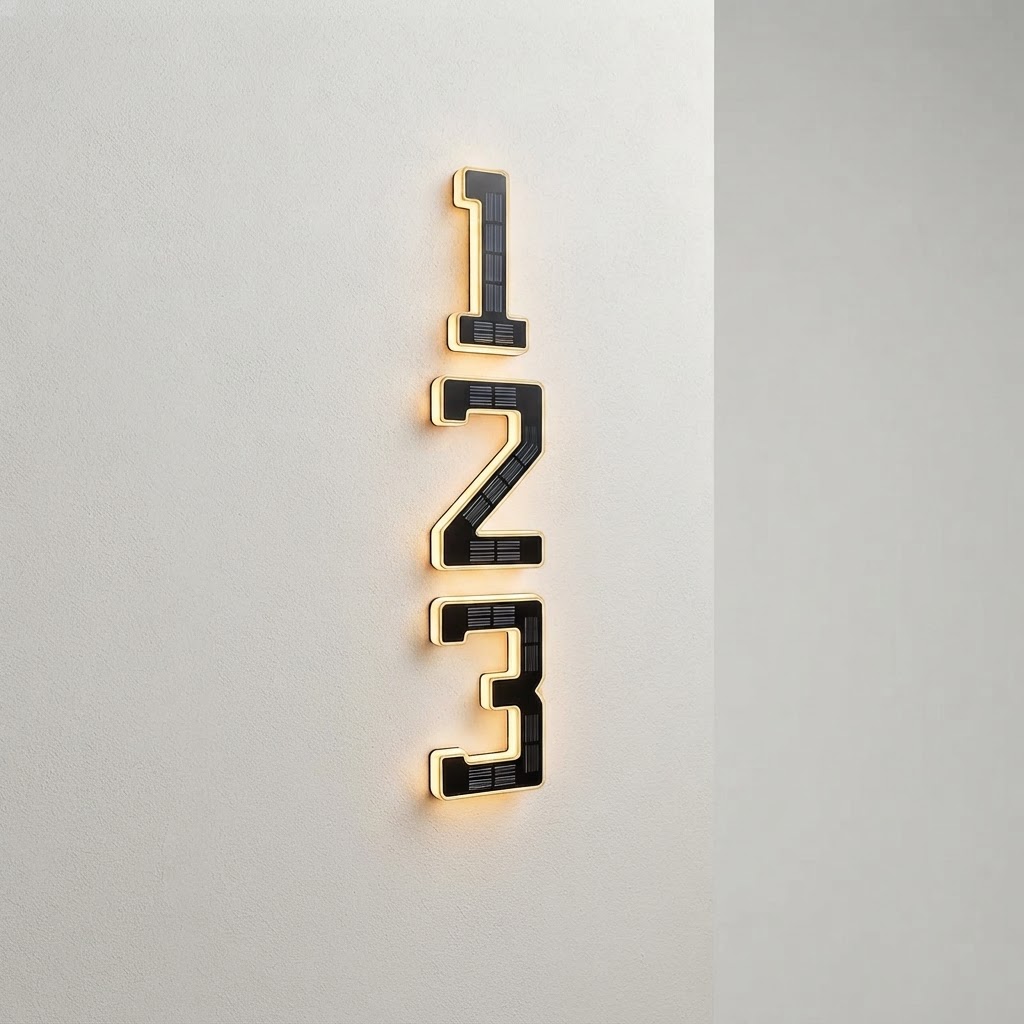
Hardwired signs run directly on your household grid, maintaining illumination regardless of daylight hours. However, modern solar units have closed the performance gap significantly.
Featuring an internal 600mAh NI-MH battery, solar lighted units require only 6-8 hours of direct light exposure to supply up to 12 hours of illumination. Built-in light sensors ensure automatic operation by turning the sign on at night and off during daytime hours, ensuring complete energy autonomy. Running cost is close to a non-issue on both sides. An LED address light draws so little power that a mains unit costs pennies a year, so anyone choosing solar to save on electricity is solving a problem that barely exists.
Reliability is the real difference, and it cuts both ways. A wired light is entirely predictable: same brightness in December as in June, unaffected by a shaded wall or a dirty panel. A solar unit depends on how much sun the panel actually received that day, which means shorter run times in midwinter, reduced output after a run of overcast days, and nothing at all if snow is sitting on the panel.
In exchange, the solar unit keeps working during a power cut, which is precisely when an entire street goes dark and a visible number matters most. Neither is simply better; they fail in different circumstances, and which failure you care about depends on your street, your wall, and your latitude.
Weather Resistance and Longevity
Outdoor exterior light fixtures must handle changing seasons and outdoor elements. Solar units constructed from ABS & PC feature an IP44 waterproof rating, built to withstand rain, snow, and UV rays without rusting or corroding. Offered at an accessible price of $24.99, solar models deliver impressive longevity without line-voltage risks or high upfront costs.
Read the full guide: The Comprehensive Guide to Solar Lighted House Numbers
Both types are built to survive outdoors, and their weak points are different.
A wired fixture is limited by its seal and its cable entry. What lets water in over time is usually a perished gasket or a cable gland that was not tightened properly on installation, and moisture reaching a mains connection is a genuine hazard rather than an inconvenience.
A solar fixture has no mains connection to protect, so a water ingress fault means a dead light rather than anything dangerous. Its limiting component is the battery, which is a consumable with a life measured in a few years, and its second vulnerability is ultraviolet degradation of the plastics on a sun-facing wall.
The realistic expectation, then, is that a wired unit can last as long as its seal and its lamp, while a solar unit's life is generally set by its battery. Whether the battery is user-replaceable is therefore the single most useful longevity question to ask before buying, and it is far more informative than the IP rating printed on the box.