Buyer's Guide: What to Look for in Outdoor Address Lighting
The Problem with Dark, Unreadable House Numbers
Arriving home at night or waiting for an important evening delivery can become frustrating when your address digits are dark and invisible from the street. Standard house numbers rely entirely on ambient porch light, which often creates deep shadows or fails to illuminate the address plaque altogether. Test your own before reading further, because the result is usually surprising. Walk out to where a car would stop at night and try to read your number from there. Four failure modes account for almost all of it: no illumination at all, dark digits on a dark background, planting that has quietly grown across the number since it went up, and numbers mounted flat on a door that sits back in a shadowed porch.
Contrast is the variable people get wrong most often. A large number in a dark finish on dark brick performs worse at night than a smaller one with a genuinely light background behind it, which is why buying bigger digits so often fails to fix the problem while adding light fixes it immediately.
The Risks of Ineffective Exterior Lighting
In emergency situations, poor address visibility creates dangerous delays for medical responders or police officers. Furthermore, missed food or package deliveries waste time and cause unnecessary headaches. Relying on hardwired lighting upgrades often leads to expensive electrical quotes and disruptive wall drilling. The consequences sort into three tiers, and only one of them is serious.
The everyday tier is delivery. Evening delivery windows now run well past sunset for most of the year, and an unreadable number is the ordinary cause of a parcel left next door or marked undeliverable.
The inconvenient tier is visitors and services, from a taxi that cannot find the pickup to a tradesperson circling the street.
The serious tier is emergency response. An ambulance or fire crew arriving at an unfamiliar address at night is working from a number it cannot see, and the fallback is slowing to a crawl and checking doors. Published guidance from emergency services consistently makes the same three points: keep the number visible from the road, keep it unobstructed, and light it if the street is dark. That is the entire case for this category of product, and it is a sound one.
The Solution: High-Performance Solar Address Plaques
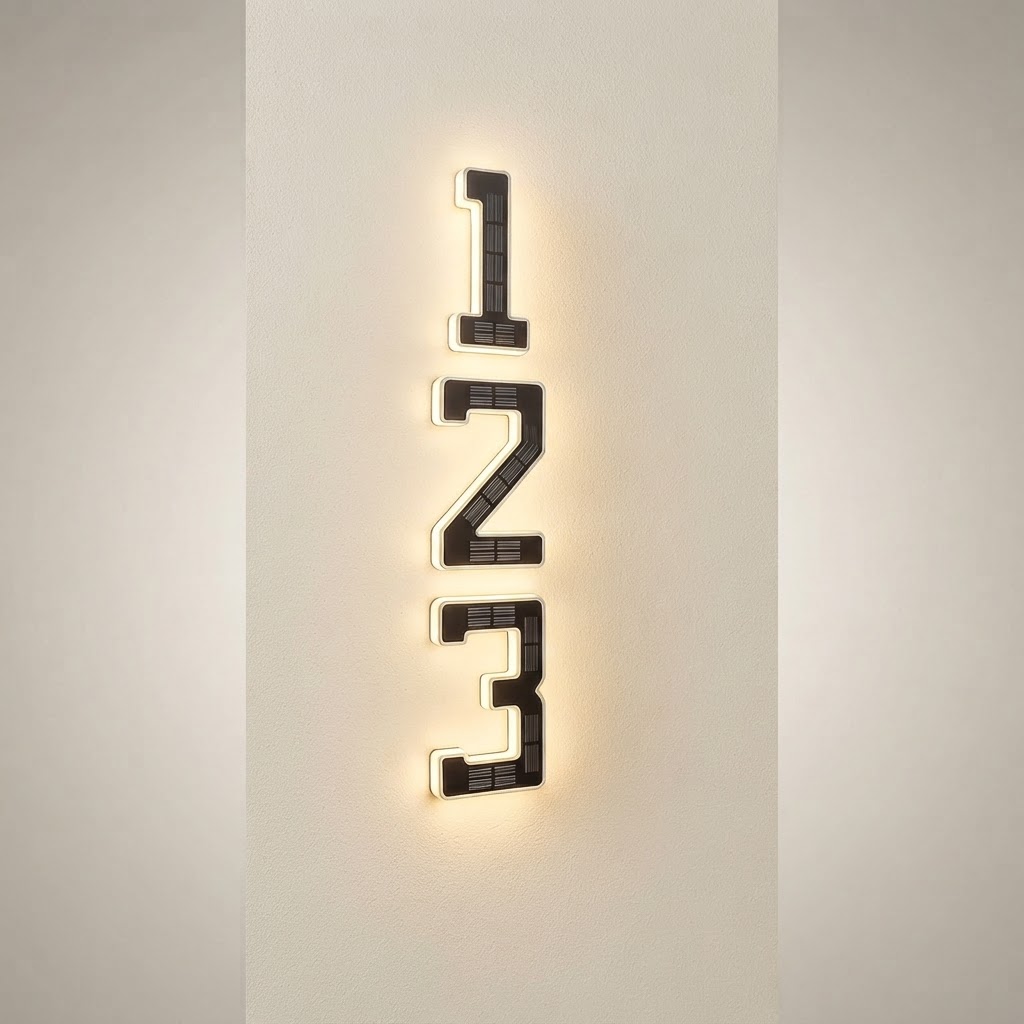
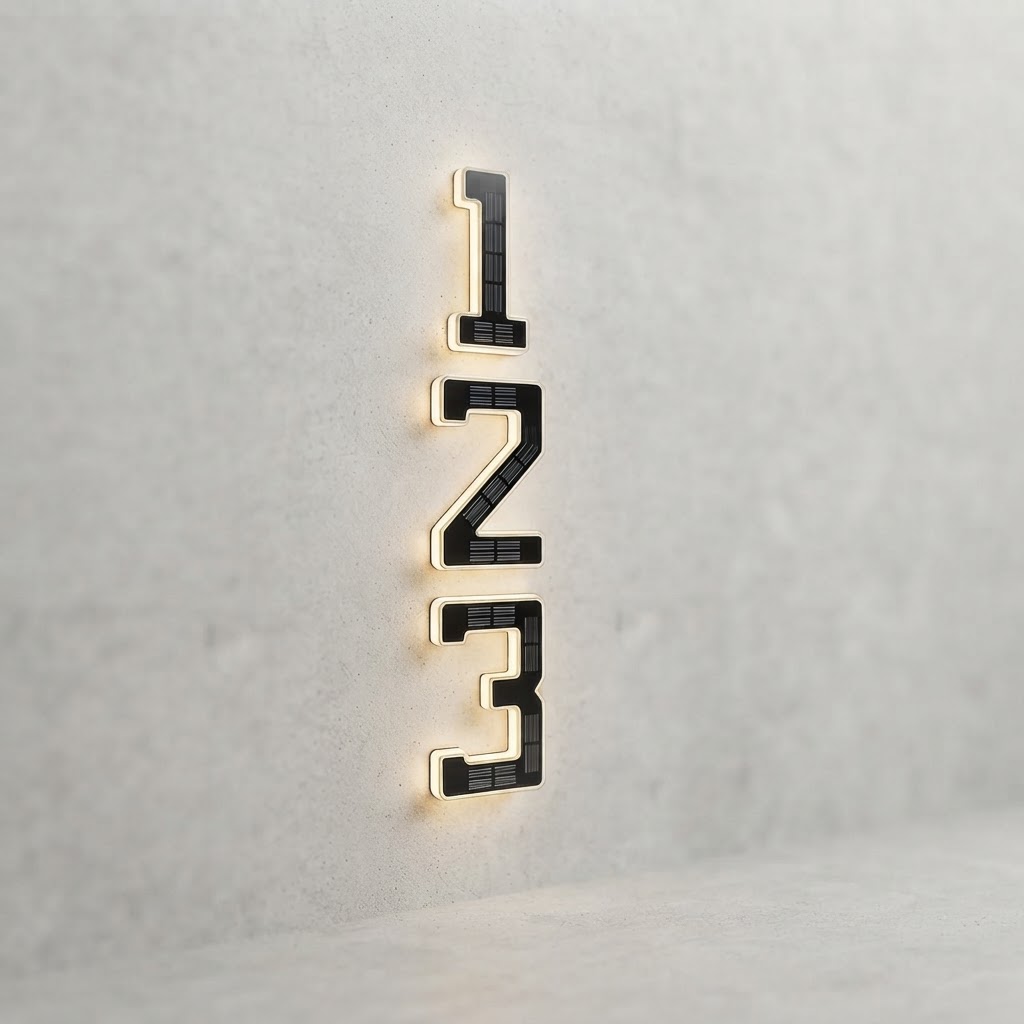
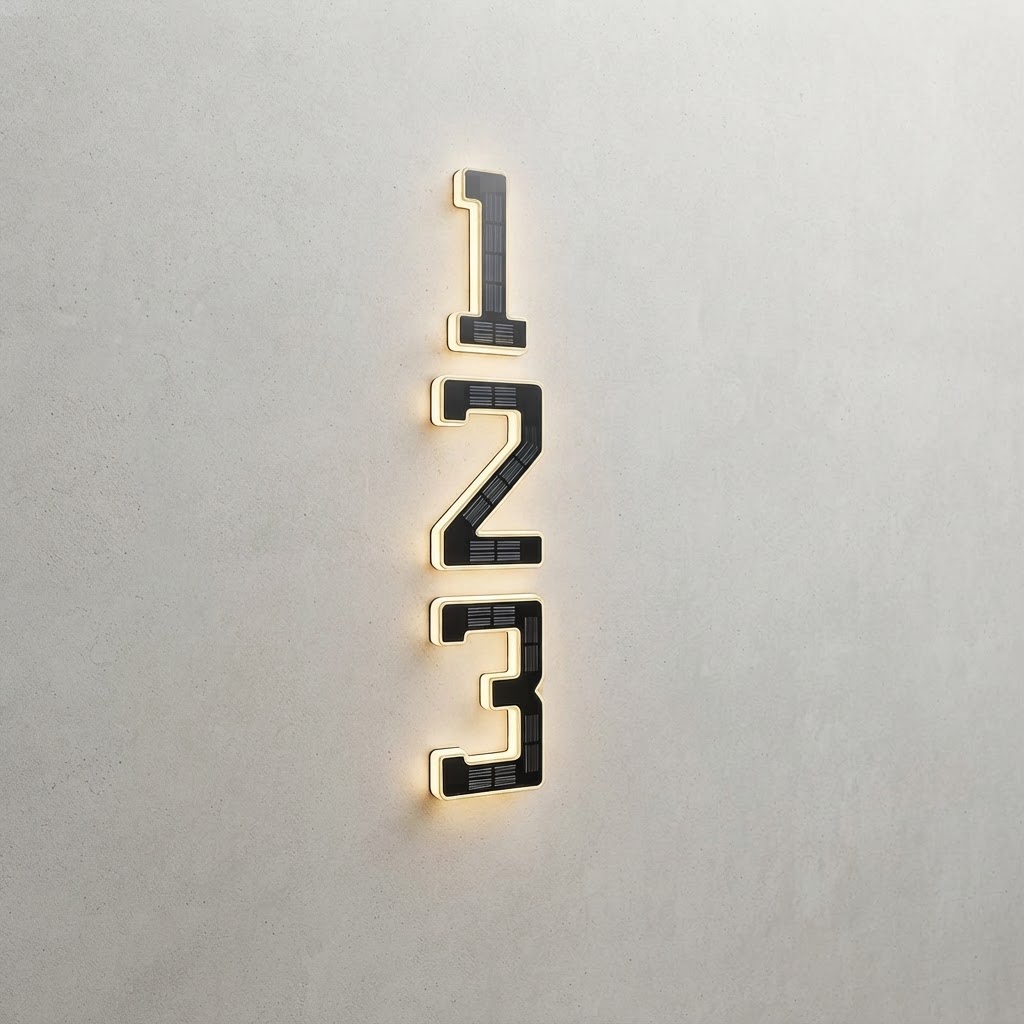
Upgrading to an integrated solar lighted house numbers fixture solves address visibility permanently. At an affordable price of $24.99, these units feature modern house number light technology with warm LED illumination that cuts through nighttime darkness effortlessly.
Key features to verify before buying include:
- Battery Capacity: Look for a 600mAh NI-MH battery capable of 12 hours of illumination following 6-8 hours of charging.
- Weather Protection: Ensure an IP44 waterproof construction made from durable ABS & PC material to withstand rain, snow, and UV exposure.
- Automated Sensor: An intelligent light sensor for automatic on/off operation removes manual switching overhead.
Read the full guide: The Comprehensive Guide to Solar Lighted House Numbers
A short checklist for judging any unit in this category, in the order the criteria actually matter.
Contrast first: a light background behind dark digits, or the reverse, and a plain typeface. Legibility is the function.
Size to the setback next. Judge from where a car stops, not from the front step. Houses set well back need larger digits than terraces on the pavement.
Then the panel and where it will live. The best plaque on a permanently shaded north wall will underperform a modest one in open sun, so the mounting position is as much a specification as anything printed on the box.
Then the battery, and specifically whether it can be replaced. That single question usually determines whether the fixture lasts three years or ten.
Then weather sealing, remembering that an IP44 rating covers splashing rain and not immersion or a pressure washer.
And finally the sensor: it needs a clear view of the sky and needs to be away from a porch light or street lamp, since a nearby light source shining onto it is the most common reason a perfectly good unit never switches on.