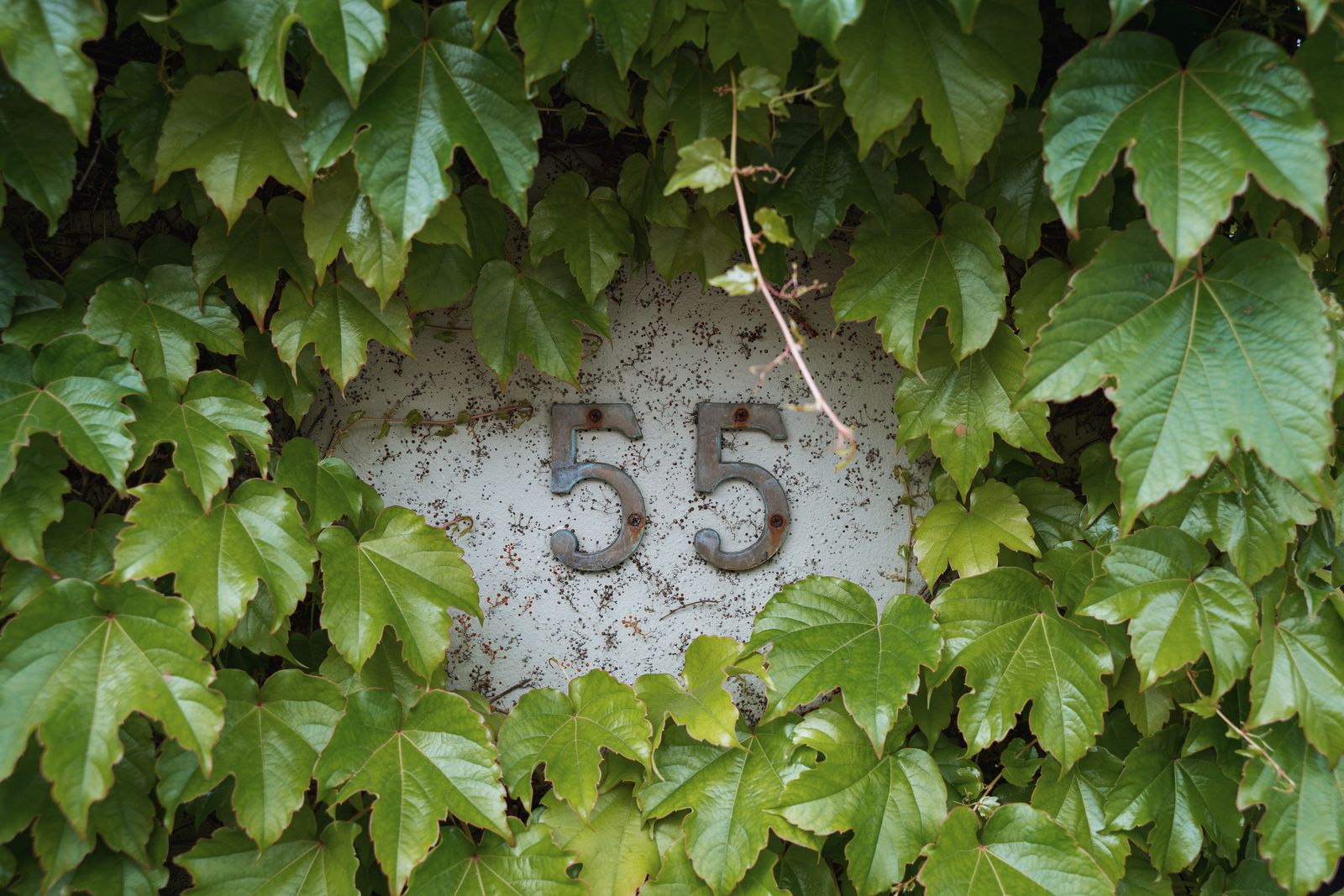
Emergency House Number Visibility Requirements & Code FAQ
Picture an ambulance navigating a dark suburban street at 2:00 AM during a heavy downpour—unlit, overgrown, or decorative script address numbers can delay critical care by vital minutes. Under International Fire Code (IFC Section 505.1), emergency house number visibility requires plain Arabic numerals at least 4 inches high with a minimum 0.5-inch stroke width, set against a high-contrast background. Numbers must be clearly readable from the street at night; solar LED illuminated address plaques fulfill dusk-to-dawn visibility requirements automatically without needing complex electrical wiring.
Selecting Code-Compliant Address Signage for Your Property
Match your address signage to your street setback distance and ambient lighting conditions to ensure full compliance with municipal fire safety codes.
Best choice for
- Solar Lighted House Numbers — Delivers automatic dusk-to-dawn warm LED illumination that satisfies IFC 505 contrast and visibility standards without running wires.
- Post-Mounted Solar Address Plaque at Curb Line — Positions 4-inch or larger high-contrast digits directly at the primary road entrance within direct vehicle sightlines.
- Script or written-word house numbers (e.g., 'Three Forty Two') which violate IFC code.
- Low-contrast metallic digits mounted directly onto dark wood or brick surfaces.
- Unlit address plaques placed under deep overhangs or behind porch railings.
- Low-Voltage Hardwired LED Address Plaque — Suitable for properties situated under dense, continuous tree canopies where sunlight exposure is insufficient for solar charging.
4-Step Emergency Address Code Audit Checklist

Photo by Christina & Peter on Pexels
- Height & Font Check: Are numerals at least 4 inches tall in plain Arabic style (no cursive or script lettering)?
- Contrast Check: Is there stark visual contrast between digits and the backing plaque (e.g., black numbers on a white backlit background)?
- Nighttime Illumination Check: Are the numbers clearly legible from 50+ feet away in complete darkness without relying on vehicle high beams?
- Obstruction Check: Are sightlines completely free from overgrown tree branches, porch pillars, or seasonal decorations?
Key First-Responder Address Visibility Guidelines
Understanding national residential code requirements ensures your property remains easily identifiable during critical emergencies, late-night deliveries, and service calls.
Printable Emergency Visibility & Setback Reference
- IFC Section 505.1 Core Standard: Minimum 4-inch numeral height, 0.5-inch stroke width, plain Arabic style.
- Contrast Rule: High visual contrast required (dark characters on light background or light characters on dark background).
- Street Setback Formula: Increase digit height by 1 inch for every additional 25 feet of distance beyond a 50-foot setback.
- Illumination Standard: Active dusk-to-dawn lighting (solar or hardwired) is recommended over passive reflective numbers to counter side-angle darkness.
- Mounting Elevation: Position plaques 4 to 6 feet above ground level near main entryways or driveway entrances for optimal sightline entry.
Address Sign Technology Comparison: Nighttime Visibility & Code Compliance
| Sign Technology | Night Visibility (50ft) | IFC 505.1 Compliance | Wiring Needed | Weatherproof Rating | Emergency Response Performance |
| --- | --- | --- | --- | --- | --- |
| Standard Unlit Plaque | Poor (Requires Direct Light) | Non-Compliant at Night | None | Varies | High Risk of Delay in Darkness |
| Reflective Vinyl Sign | Moderate (Headlight Dependent) | Marginal | None | Low to Moderate | Fails when approached from side angles or fog |
| Hardwired LED Sign | Excellent (Constant Brightness) | Fully Compliant | Yes (120V / Transformer) | IP65 typical | High performance; costly installation |
| Solar Lighted LED Plaque | Excellent (Warm 12-Hr Illumination) | Fully Compliant | None (Solar Powered) | IP44 Waterproof (ABS & PC) | Optimal balance of zero-cost operation & high visibility |
Comparing different outdoor address sign options reveals significant differences in emergency response effectiveness, installation difficulty, and ongoing maintenance.
Recommended Solution for Nighttime Emergency Visibility
Upgrade your curb appeal and safety profile simultaneously with an energy-efficient solar illuminated address sign.
Road Setback vs. Number Height & Visibility Diagram
This architectural sightline diagram illustrates how distance from the road affects character size legibility for drivers traveling at standard residential speeds.
Emergency Address Visibility Calculator Specification
Use this mathematical logic model to compute the exact character height and illumination profile required for your home's driveway setback.
Critical Address Visibility Mistakes That Delay First Responders
Avoid these frequent outdoor address sign pitfalls that jeopardize emergency response times and violate local municipal safety codes:
Frequently Asked Questions: Emergency Code & Solar Signs
Get clear, authoritative answers to common technical and compliance questions regarding residential address visibility.
How to Audit and Upgrade Your Property Address Visibility
Your decision: Audit your address sign tonight from 50 feet away in complete darkness to evaluate its visibility and contrast.
Do this next: If your current house numbers are unlit, undersized, or obscured, replace them with an energy-efficient solar illuminated address plaque featuring 4-inch high-contrast digits.
Related resource: Consult your local city or county fire marshal portal to review any regional amendments to IFC Section 505.
Solar Lighted House Numbers — Weatherproof, warm LED address plaque with automatic dusk-to-dawn sensor and 12-hour rechargeable battery.
Take action today to make your home safer and easier to locate for emergency personnel, guests, and delivery drivers.