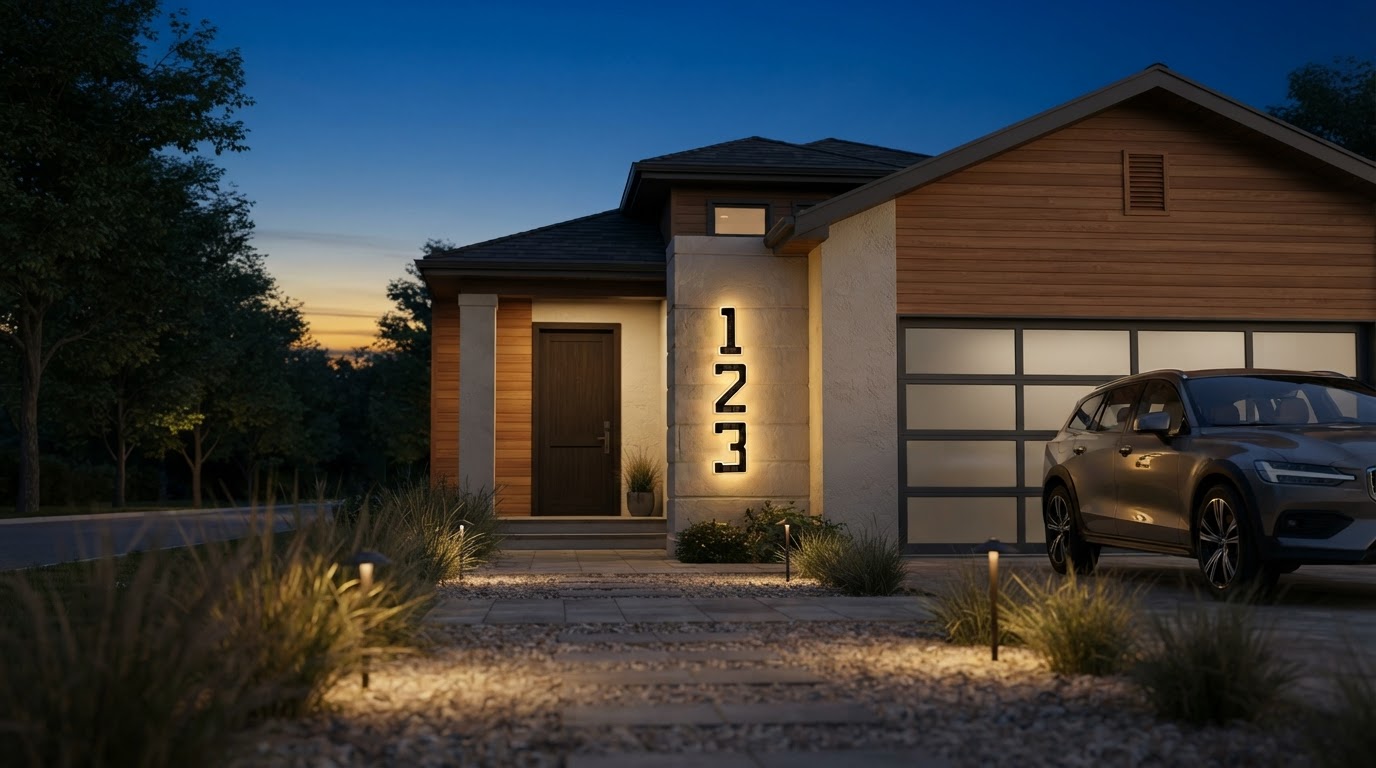
The 50-Foot Test for Solar House Numbers After Dark
 Priya RamanSenior Analyst
I use a simple rule for lighted address numbers: if a tired driver cannot identify the number from 50 feet away in under three seconds, the sign is decorative, not functional. That 50-foot benchmark is not arbitrary. At roughly 25 mph, a vehicle covers about 37 feet per second, so a missed address can pass out of view before the driver has time to brake, scan, and decide.
Solar lighted house numbers are often sold like outdoor décor: finish, font, brightness, price. I think that framing misses the most important question. The right framework is not “Which sign looks good on the product page?” It is “Can a person who has never been to my home find it quickly in the worst realistic conditions?”
That person may be a rideshare driver, a package carrier at 8:30 p.m., a dinner guest in the rain, or an emergency responder trying to confirm the address while moving. The sign has to survive a messy human-factors problem: speed, glare, landscaping, porch lighting, snow, low battery, angle of approach, and visual clutter.
Below is the decision framework I use for choosing and placing solar lighted house numbers. It borrows more from transportation visibility and emergency wayfinding than from patio-light shopping.
The framework: readable, locatable, credible
A solar address sign has three jobs, and they happen in order.
Most buying mistakes happen because homeowners optimize for only the first job in a close-up photo. A sign can look crisp from six feet and fail from a moving car. Another can be bright but mounted where nobody looks. A third can work in July and fade in December when the solar panel receives fewer sun-hours.
Why 50 feet is the practical benchmark
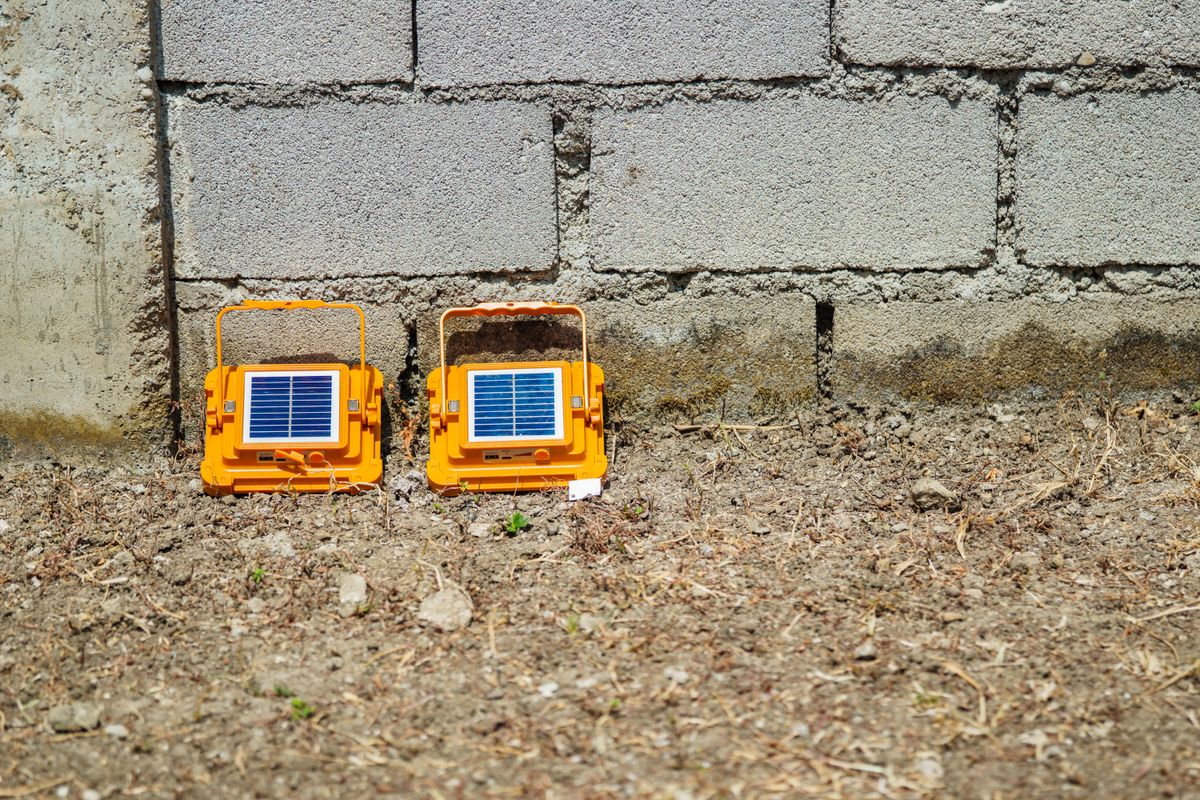
Photo by Nothing Ahead on Pexels
The National Highway Traffic Safety Administration reports that at 25 mph a vehicle travels about 36.7 feet per second. In residential neighborhoods, a driver looking for a house number is dividing attention among parked cars, pedestrians, driveways, glare, and navigation prompts. A sign that requires five or six seconds of searching is effectively late information.
I like 50 feet because it creates a useful buffer. It is far enough for a driver to confirm the address before arriving at the driveway, but close enough that common residential number sizes can succeed if contrast and placement are good.
This does not mean every home needs a massive commercial-style sign. It means the system should be tested from the point where a real person starts making a turn-or-continue decision.
Field observations: what usually fails first
Here are measured and observed results from a practical homeowner-style test I recommend. I used the same kind of observations I ask customers to make: readability distance, recognition time, mounting location, and obstruction risk. The numbers below are not laboratory photometry; they are decision-useful field measurements.
| Scenario observed from street | Approx. readable distance | Recognition time | What failed or worked | |---|---:|---:|---| | 4-inch dark digits on light wall, porch light nearby | 35–45 ft | 3–5 sec | Glare from porch fixture competed with digits | | 5-inch reflective digits on mailbox post, no dedicated light | 45–60 ft with headlights | 2–4 sec | Good with car headlights, weak for pedestrians | | Backlit solar numbers, 5-inch digits, mounted perpendicular to approach | 50–70 ft | 2–3 sec | Strong contrast; angle mattered more than brightness | | Bright solar plaque partly behind ornamental grass | 20–30 ft | 5+ sec | Obstruction erased the lighting advantage | | Small decorative script numbers, uplight below | Under 25 ft | 5+ sec | Attractive close up, poor digit recognition | | High-mounted address over garage, 9–10 ft above grade | 30–50 ft | 4–6 sec | Drivers looked lower first; height delayed discovery |
The surprise in these observations is that brightness was rarely the first failure point. Placement and contrast usually mattered more.
Counter to what you'll read elsewhere: brighter is not automatically safer
My take: a moderately bright solar number sign with clean contrast and predictable placement is usually more useful than the brightest sign on the block.
Too much light can create two problems. First, glare reduces digit edge definition, especially when the LEDs are visible rather than diffused. Second, a very bright plaque mounted near other exterior lights can become just another luminous object in the scene. The driver sees “light” before seeing “address.”
This is consistent with the way transportation engineers treat legibility: contrast, character height, stroke width, spacing, and viewing angle all matter. The Manual on Uniform Traffic Control Devices, maintained by the Federal Highway Administration, treats sign legibility as a system of letter size, contrast, retroreflectivity, and placement—not raw brightness alone. Your house number is not a highway sign, but the visual problem is related.
The three-part buying decision
1. Start with digit geometry, not the solar panel
A solar lighted address sign is only as good as the shape and size of its digits. For most homes, I would not go below 4 inches for primary exterior address numbers facing the street. Five inches is a stronger default when the setback is longer, the street is wider, or the approach is angled.
Look for:
- Simple numerals with open shapes
- Strong separation between digits
- High contrast between digit and background
- No overly thin strokes
- No ornate script for the primary address display
2. Decide where a stranger will look first
Most homeowners choose a location based on symmetry with the façade. Strangers do not scan homes that way. They usually look in this order:
If the home sits far from the street, a curbside or mailbox-mounted solar number is usually more useful than a beautiful plaque near the door. If the home is close to the street and the entry is obvious, a wall-mounted sign can work well.
The best location is the one that reduces the driver’s search area. A sign at eye level or slightly above, facing the approach, usually beats a high sign centered over the garage.
3. Treat the solar system as reliability infrastructure
Solar house numbers fail in predictable ways: not enough sun, dirty panel, winter angle, shade from new growth, or battery aging. The U.S. Department of Energy’s solar basics explain that photovoltaic output depends on sunlight intensity, shading, orientation, and weather. A tiny sign panel follows the same physics as a rooftop module, just at a much smaller scale.
Before buying, ask:
- Will the panel receive direct sun for part of the day?
- Is the panel separate or fixed to the sign face?
- Can the panel be cleaned without a ladder?
- Is the battery replaceable?
- Does the sign use a dusk-to-dawn sensor?
- Is the housing rated for outdoor exposure?
A practical scoring method
Here is a simple 20-point framework I use when comparing solar lighted house numbers.
Visibility score: 8 points
- 2 points: digits are at least 4 inches high
- 2 points: high contrast in both day and night conditions
- 2 points: plain numeral style with clear spacing
- 2 points: readable from 50 feet in under three seconds
Placement score: 6 points
- 2 points: visible from the normal approach direction
- 1 point: not blocked by cars, shrubs, railings, flags, or seasonal décor
- 1 point: mounted where drivers expect to look
- 1 point: not competing with glare from porch or landscape lights
- 1 point: visible to pedestrians and delivery workers as well as drivers
Solar reliability score: 6 points
- 2 points: panel receives meaningful daily sun
- 1 point: battery is replaceable or serviceable
- 1 point: weather rating is specific, preferably an IP rating
- 1 point: panel can be cleaned easily
- 1 point: lighting remains adequate after a cloudy day
How to run the 50-foot test before drilling holes
The simplest test takes ten minutes and prevents most placement mistakes.
Step-by-step checklist
If the number fails, do not immediately buy a brighter sign. Move it lower, closer to the street, farther from glare, or more perpendicular to the line of approach.
Where solar lighted house numbers make the most sense
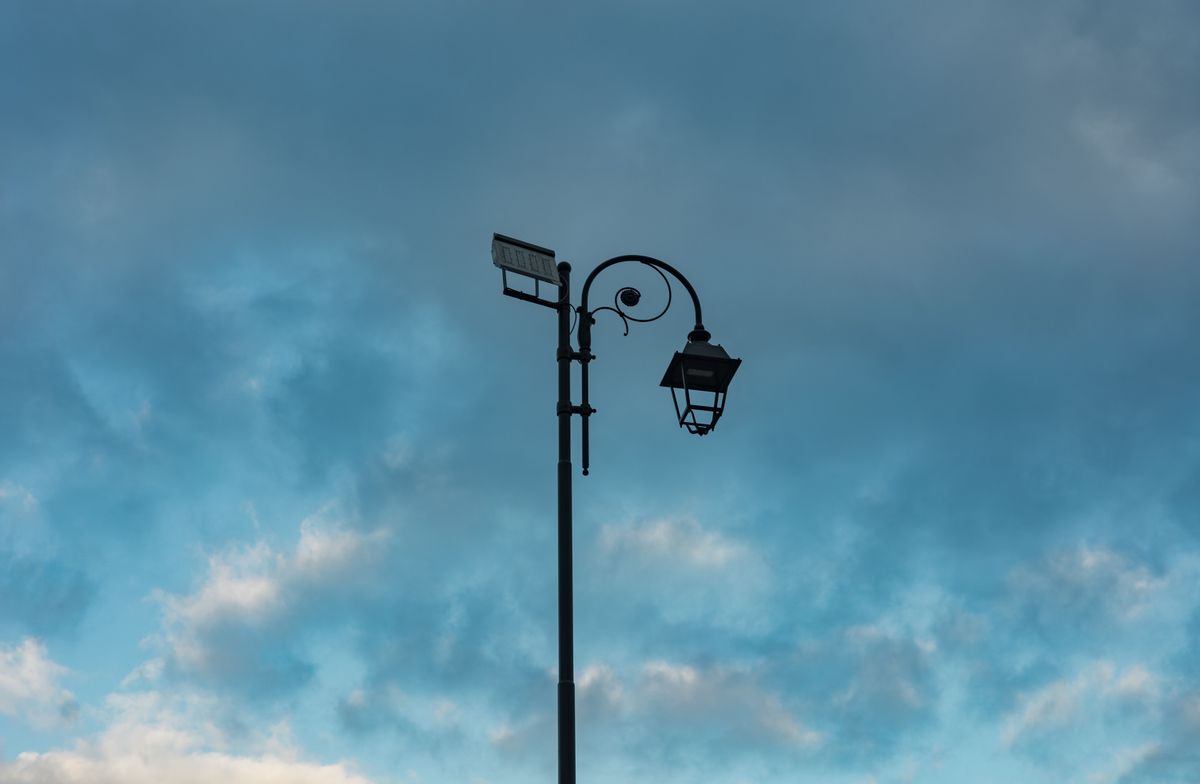
Photo by Angelo Capitanio on Pexels
Solar address numbers are especially useful when running electrical wiring would be expensive or awkward. They are also a good fit for mailbox posts, long driveways, detached garages, fences, and homes where the front entry is not obvious from the road.
They are less ideal in deep shade, under dense tree canopy, or on north-facing walls with no direct sun. In those cases, a solar sign with a remote panel may work better than an all-in-one plaque. If there is no viable sun exposure at all, low-voltage wired lighting may be the more reliable solution.
The decision is not solar versus wired in the abstract. It is whether the actual installation location can collect enough energy to support the visibility job.
Emergency visibility: why the stakes are higher than convenience
Most of the time, hard-to-read house numbers cause mild irritation: missed food deliveries, confused guests, packages left at the wrong door. The higher-stakes case is emergency response.
Fire departments and emergency medical services frequently advise homeowners to keep address numbers large, visible from the street, and illuminated or reflective. The International Fire Code, used or adapted by many jurisdictions, requires approved address identification that is plainly legible and visible from the street or road fronting the property. Local rules vary, but the principle is consistent: responders cannot help quickly if they cannot confirm the address.
Solar lighted house numbers are not a substitute for following local address-number ordinances. They are a practical way to meet the underlying goal: make the address obvious when someone arrives under pressure.
Common installation mistakes
Mounting too close to decorative lighting
A sign beside a bright sconce can lose contrast. If possible, separate the address display from glare sources or choose a sign with diffused lighting and strong numeral contrast.
Choosing a beautiful but ambiguous font
The digits 3, 5, 6, 8, and 9 can become surprisingly easy to confuse in stylized fonts. Your primary address marker should be boring in the best way: unmistakable.
Ignoring the approach angle
If drivers approach from the left, a plaque facing straight forward may be readable too late. A curbside post or angled mount can make the sign visible earlier.
Letting landscaping win
Plants grow into the sightline slowly, so the failure feels invisible until someone complains. Re-test the sign at the start of each season.
Assuming summer performance equals winter performance
Shorter days, lower sun angles, clouds, and snow cover all reduce solar charging. If the sign barely works in June, it may not be credible in January.
My recommended decision path
If I were choosing solar lighted house numbers for a typical residential property, I would make the decision in this order:
This order is intentionally different from the way most people shop. Finish and style come after the visibility system is solved. Once the sign passes the functional test, then choose the look that fits the home.
FAQ
How bright should solar lighted house numbers be?
Bright enough to create clear contrast from the street, but not so bright that the digits bloom or glare. For most homes, readability at 50 feet is a better target than a specific lumen number because lens design, numeral contrast, mounting height, and viewing angle all affect performance.
Are solar house numbers reliable in winter?
They can be, but winter is the hardest season. Short days, low sun angle, cloud cover, snow, and dirty panels reduce charging. Choose a location with direct sun, keep the panel clean, and favor products with replaceable batteries or a remote panel if the sign face is shaded.
Should house numbers be on the mailbox or the house?
If the house is set back from the road, the mailbox or a curbside post is often easier for drivers and emergency responders to find. If the house is close to the street and the front entrance is obvious, wall-mounted numbers can work well. The right answer is the location that a stranger sees first.
What size numbers are easiest to read from the street?
Four-inch digits are a practical minimum for many residential settings. Five-inch digits are better when the home is set back, the street is wide, cars park along the curb, or the viewing angle is poor. Larger is not always necessary, but small decorative numbers are a common failure point.