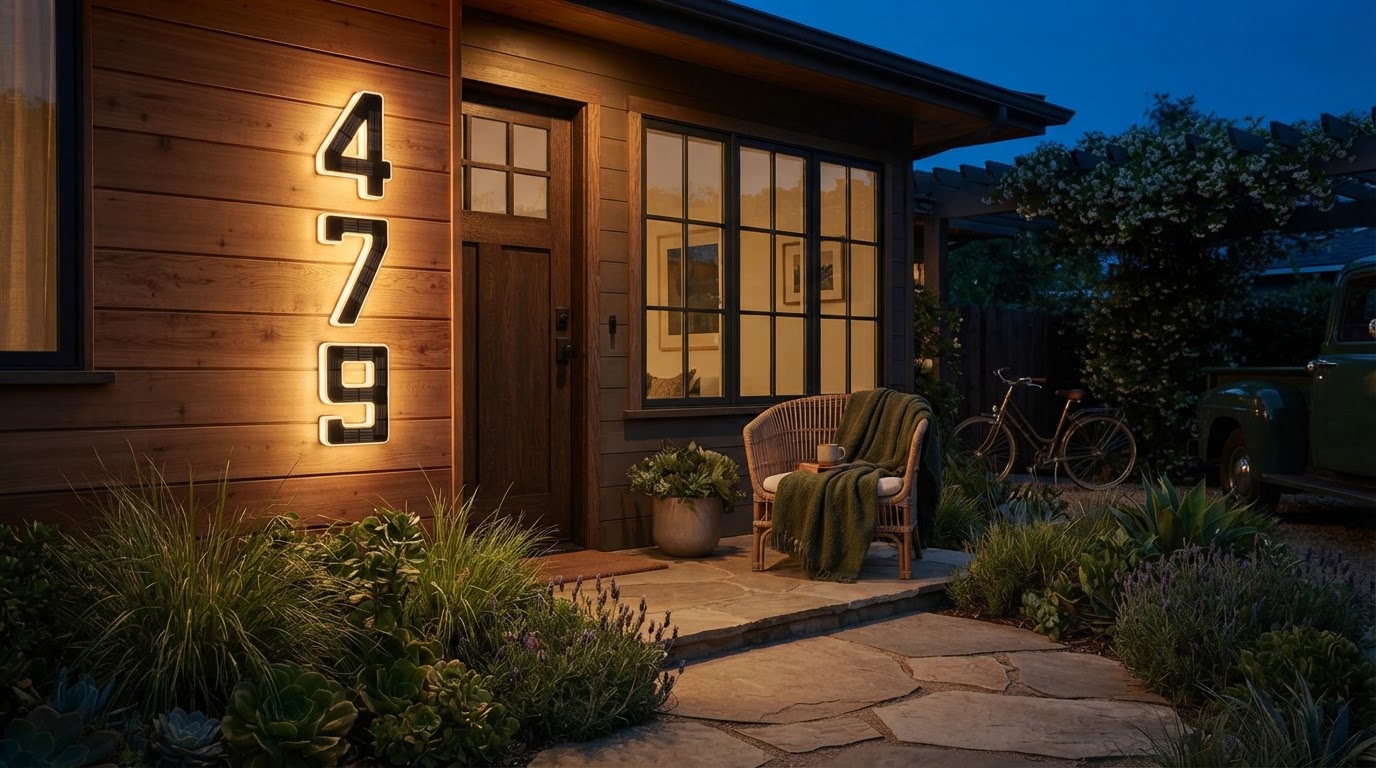
Why buy a Solar Lighted House Numbers address plaque?
 Maya ChenContributing Editor
October 23, 2026 — A solar house address plaque with light effectively bridges the gap between passive signage and high-maintenance hardwired systems, provided the unit utilizes high-efficiency monocrystalline panels.
The conventional wisdom says that any reflective sticker will suffice for emergency services, yet first responders frequently cite unlit or obscured numbers as a primary delay in response times. Homeowners seeking a solar address sign for yard visibility must prioritize lumen output over aesthetic design to ensure the plaque serves its functional purpose during the 12-hour cycle of darkness.
Does a solar address plaque provide enough light for emergency services?
Yes, a solar address plaque typically generates between 5 and 20 lumens, which is sufficient for identification from the street if the contrast ratio between the numbers and the background is high. The part nobody talks about is the degradation of battery capacity in cold climates, which can reduce the active illumination window by up to 40% during winter months. According to product data from Address America, high-quality solar lamps are designed to illuminate automatically at dusk and turn off at dawn, ensuring that the sign is active exactly when visibility is lowest. For those placing units away from the house structure, choosing a solar address sign for yard visibility requires selecting a model with a wide-angle LED spread to prevent hot-spotting on the digits.
How does weatherproofing affect the lifespan of solar house numbers?
Weatherproofing determines whether a solar house address plaque will last two seasons or ten, as moisture ingress is the leading cause of LED driver failure. Most premium manufacturers now utilize IP65-rated enclosures to protect the internal circuitry from rain and snow. Selegna Signs notes that their premium lighted house numbers and solar LED address signs are built with weatherproof materials and custom sizes to withstand varied environmental stressors. Run the math: a cheaper, non-rated unit may cost 50% less upfront, but if the seal fails within 18 months, the total cost of ownership exceeds that of a durable, sealed unit. Proper installation is also a factor in longevity; following a 4-step setup for solar lighted house numbers in yards can prevent ground moisture from wicking into the battery compartment of stake-mounted models.
Quick answers
Q: Can solar address plaques be installed on stone or cement? A: Yes, manufacturers like Backlit LED Sign provide mounting hardware specifically for wood, stone, and cement walls, ensuring the LED system remains stable on porous surfaces.
Q: How many hours of sunlight are required for a full night of illumination? A: Most modern solar address signs require 6 to 8 hours of direct sunlight to power the LED array for a standard 10-hour dusk-to-dawn cycle.
Q: Are the batteries in these address plaques replaceable? A: Most units use standard 1.2V Ni-MH or 3.7V Li-ion batteries that have a lifespan of approximately 500 to 1,000 charge cycles before requiring a replacement.
I’ll change my mind when reflective paint technology can match the 20-lumen output of an active LED system in zero-ambient-light conditions. Until then, active illumination remains the superior choice for navigational safety.
Learn more about Solar Lighted House Numbers at https://solarlightedhousenumbers.com.
Sources
- Lighted House Numbers & Solar LED Address Signs
- Lighted Address Plaque Solar Powered Address Sign
- Your House Needs This! Solar Light-Up Address Sign TESTED!