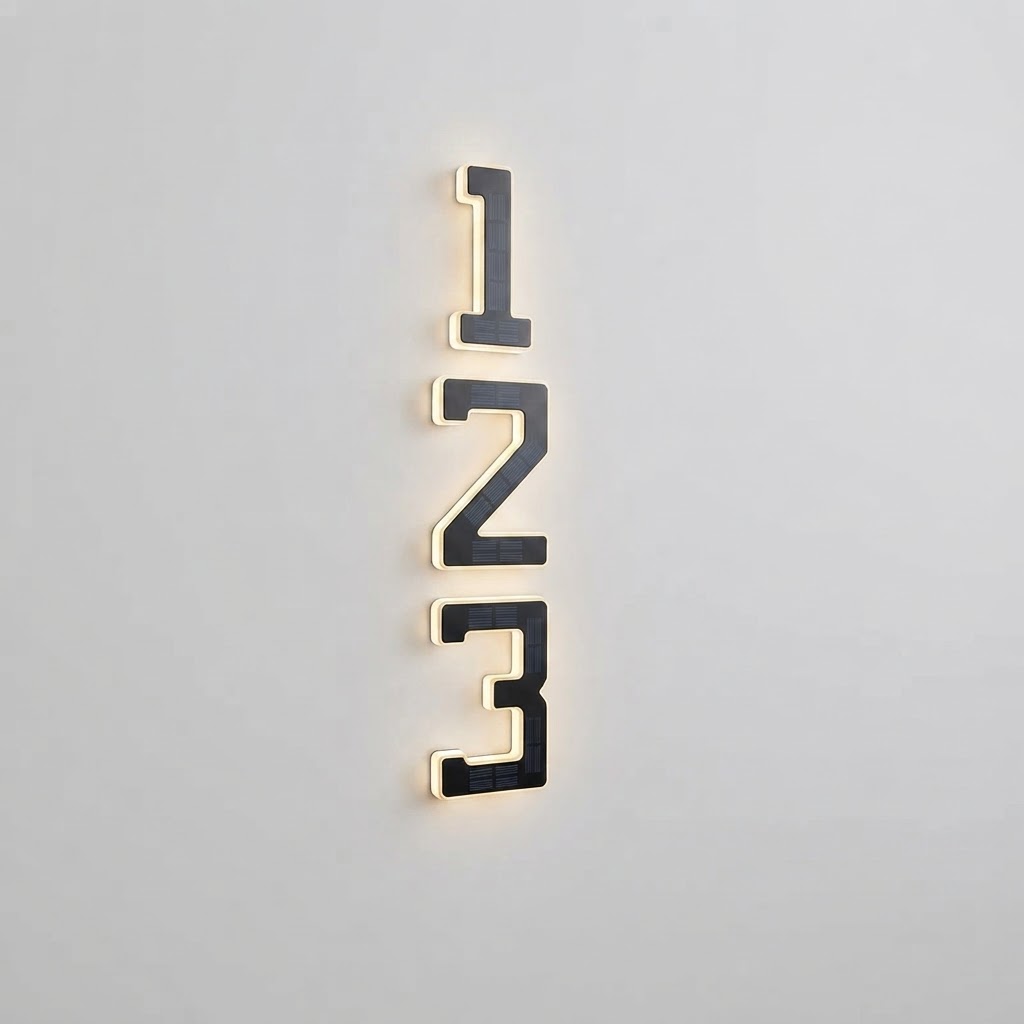
5 Reasons to Upgrade Your Exterior Plaque with LED Solar House Numbers
1. High Visibility for Emergency Services and Deliveries
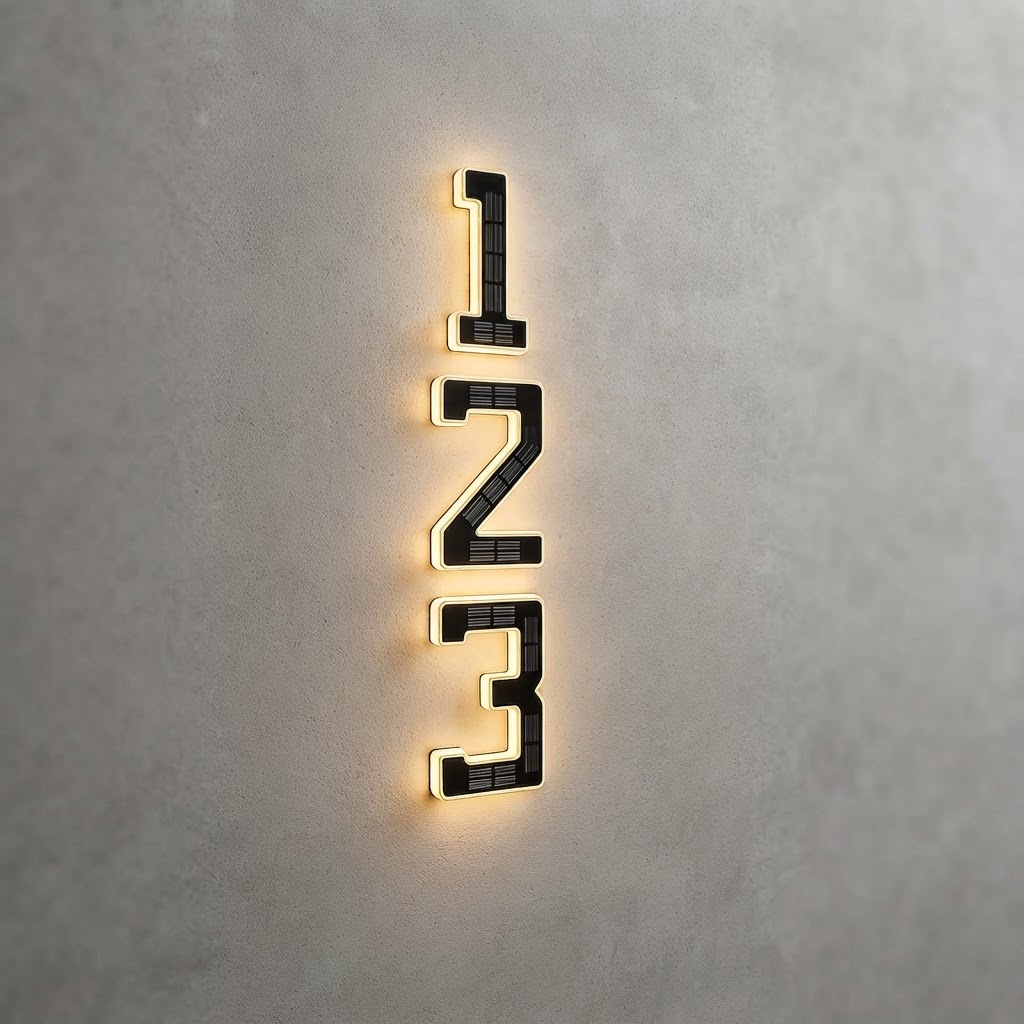
Clear home address identification is crucial for night safety. Warm LED illumination delivers crisp contrast against the stylish black and white plaque background, ensuring visitors, delivery drivers, and emergency personnel find your property quickly. This is the reason that actually justifies the purchase, and it is worth taking seriously rather than treating as marketing. Ambulance and fire crews navigating an unfamiliar residential street at night are working from a house number they cannot see, and the standard fallback is to slow down and hunt door to door. Every fire service and ambulance trust that publishes public guidance on the subject says the same thing: make your number visible from the road, and make it visible in the dark.
Delivery is the everyday version of the same problem. Evening delivery windows now run well past sunset for most of the year, and an unlit number is the usual cause of a parcel left at the wrong door or marked undeliverable. The practical test is simple and free: walk out to the middle of the road after dark and see whether you can read your own number from where a driver would stop. Most people who try it are surprised.
2. Zero Wire DIY Installation
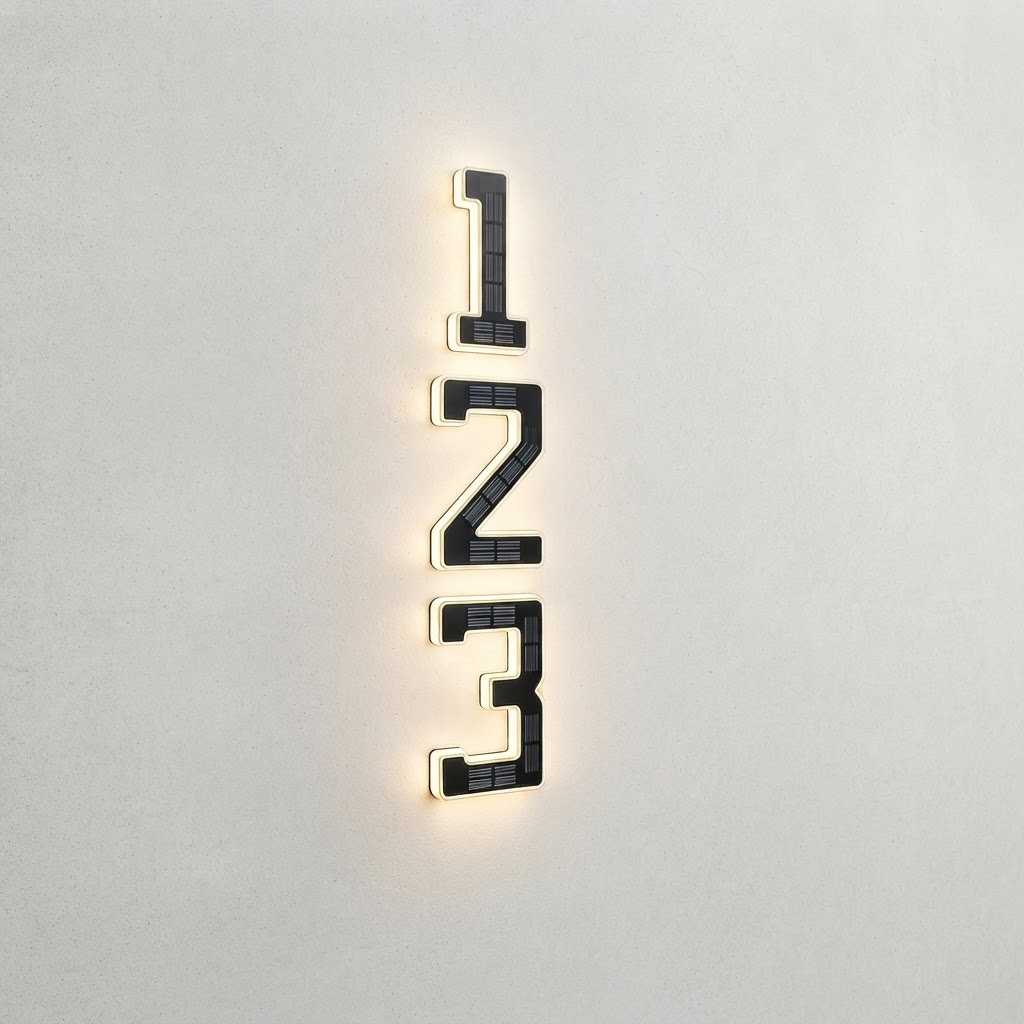
Avoid hiring expensive electricians or cutting into exterior walls. With solar panels built directly onto the surface, setup is completely wireless. The package includes mounting screws and positioning paper, bringing estimated installation cost to $0 (DIY). For additional installation tips, read through [the main guide]. The absence of wiring removes more than just cost. A hardwired exterior fixture means drilling through the wall, running cable, and connecting to a household circuit, which in most jurisdictions is notifiable electrical work that a homeowner is not permitted to sign off themselves. Nothing here is notifiable, because nothing connects to the mains.
It also changes where you are allowed to put it. A wired unit has to go somewhere a cable can reasonably reach, which often means a compromise position near an existing circuit. A solar unit can go wherever it is most readable from the street and gets the most sun, and those two criteria are usually satisfied by the same spot on the front elevation. For renters, the difference is starker still: a screw-mounted plaque is a reversible change, and a mains-wired fixture is not.
3. Eco-Friendly Solar Charging
Equipped with a built-in 600mAh NI-MH battery, these signs charge efficiently in 6-8 hours under standard daylight. An intelligent light sensor automatically turns the warm LED lights on at night for up to 12 hours of illumination without drawing electrical grid power. The honest scale of the energy saving is small. An LED address light draws a trivial amount of power, so a hardwired equivalent left on all night costs pennies a year to run. Anyone buying this specifically to lower an electricity bill will not notice the difference.
The real advantages are practical rather than environmental. There is no circuit to trip, no cable to fail, and no reason to touch the fixture for years at a stretch. And because it is entirely self-contained, it keeps working through a power cut, which is exactly the moment a whole street goes dark and a visible house number matters most.
The one genuine environmental consideration runs the other way and deserves mentioning: the battery is a consumable with a finite life, and when it eventually stops holding charge it should go to a proper battery recycling point rather than in household waste.
4. Weatherproof ABS and PC Build
Outdoor fixtures must withstand changing environmental conditions. Constructed from heavy-duty ABS & PC with an IP44 waterproof rating, this address plaque resists rain, snow, and long-term UV rays. The two plastics do different jobs. ABS is tough and impact-resistant, which suits the body of the unit where it needs to survive knocks, wind-driven debris, and the occasional football. Polycarbonate is the clear component: it is far more impact-resistant than acrylic and transmits light well, which makes it the right choice for the lens face over the numerals.
The weakness both share is ultraviolet light. Untreated ABS chalks and yellows in sustained sun, and polycarbonate yellows too, which is why UV stabilisation in the material matters more for a south-facing wall than any other specification on the list. On a shaded elevation this is largely academic; in full sun, it is the difference between a plaque that still looks black and white after five years and one that has gone grey and cloudy after three.
Sealing is the other long-term consideration. What eventually lets water into an outdoor fixture is rarely the housing itself but the gasket around the lens hardening and shrinking with age. It is worth a look every couple of years.
5. Contemporary Curb Appeal Upgrade
Available at an accessible price of $24.99 and covered by a standard manufacturer [warranty period] not specified, solar lighted house numbers offer an instant visual upgrade to any porch, gate, or exterior garage wall.
Read the full guide: The Comprehensive Guide to Solar Lighted House Numbers
Address numbers are a small detail that carries disproportionate weight, because they are one of the few things on a front elevation that a visitor looks at directly rather than in passing. Faded, mismatched, or partly missing numbers read as neglect in a way that is hard to articulate but immediately obvious.
A few points on choosing something that still looks right in five years. Match the finish to the other exterior metalwork on the house, meaning the door furniture and any lantern, rather than treating the number in isolation. Keep the typeface plain, since a legible number is the whole point and a decorative face defeats it at exactly the moment it matters. And check the size against the setback: a house sitting well back from the road needs larger digits than a terrace fronting directly onto the pavement, and a number that is perfectly readable from the garden path can be unreadable from a car.