How Do Automatic Light Sensors Work in Solar House Numbers? Top FAQs Answered
Automatic light sensors in solar house numbers work by measuring ambient brightness and switching the warm LED on when the photocell reads dusk, then off at dawn. They are not clocks. If the sensor still sees a porch lamp, the address stays dark even at midnight. These top FAQs explain how the automatic circuit, the 600mAh NI-MH battery, and placement share the job.
How the photocell decides dusk
A light sensor is a small window on the housing. As daylight falls, resistance in the photocell changes and the controller enables the LED. At sunrise the reverse happens so the battery can recharge. That is how automatic light sensors work in solar house numbers: they copy the sky, not your schedule.
Top FAQs from homeowners usually start with "it never turns on." That is often porch glare, not a broken sensor. Cover the window after dark. If the numerals appear, the automatic logic is working and the mount is too bright.
Sensors cannot invent energy. A shaded panel leaves the 600mAh NI-MH battery empty, so the automatic on command has nothing to spend. IP44 housings protect the electronics from rain; they do not shade the photocell from decorative lighting.
What automatic is not
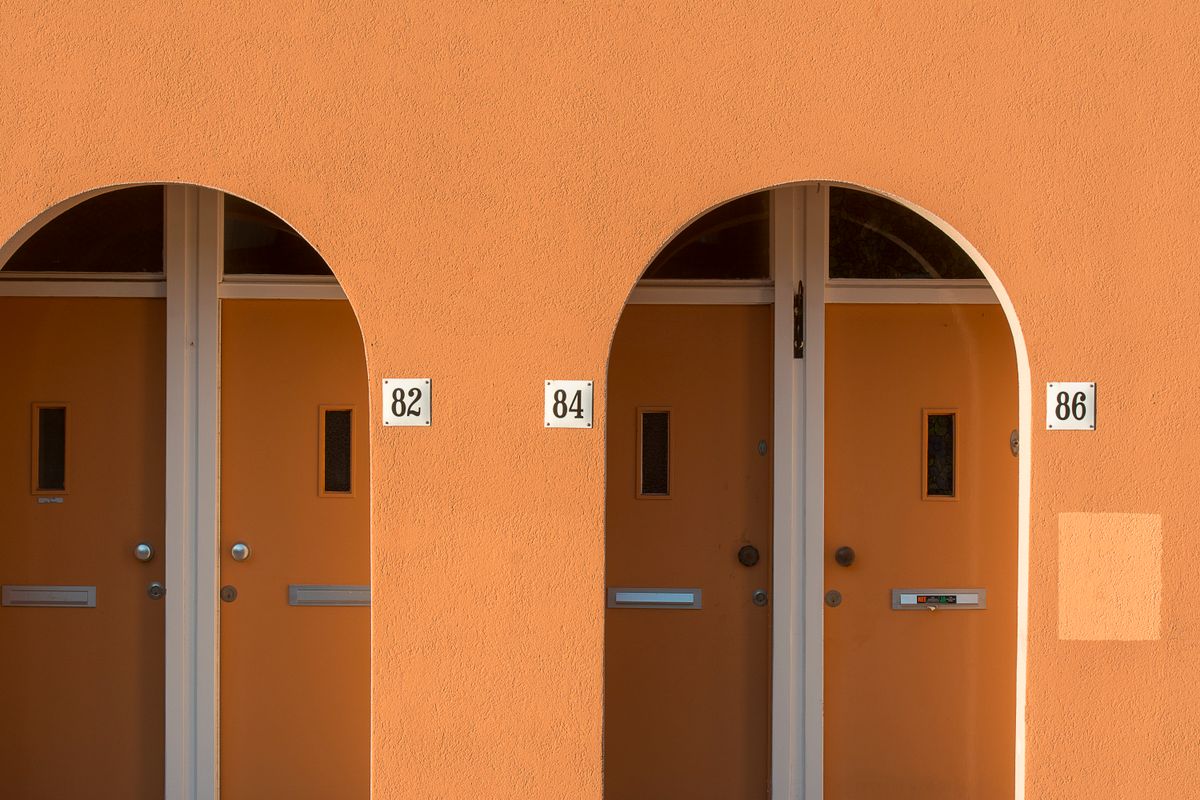
Photo by Jan van der Wolf on Pexels
Automatic is not a timer you set for 8 p.m. Automatic is not an app. Automatic is not a glow sticker that vaguely remembers daylight. Hardwired photocells work the same way on house power. Solar house numbers add the battery in the middle of that loop.
Place the sensor toward the dark street or open sky. Place the panel toward the sun. Those two directions are sometimes in conflict on a wall; a mailbox or yard post can split the difference.
Sensor behavior vs other night options
| Option | How it switches | Fails when | | --- | --- | --- | | Automatic light sensor on solar house numbers | Photocell at dusk/dawn | Porch glare or empty battery | | Manual solar switch | Your hand | You forget | | Hardwired photocell | Same dusk idea on house power | Breaker or lamp failure | | Glow stickers | No sensor | They simply fade | | Mailbox solar with streetlamp nearby | Photocell may stay "day" | Sensor sees the globe | | Yard post in open dark | Clean dusk signal | Shade on the panel by day |
How automatic light sensors work is simple; where you put them is the FAQ that actually matters.
Placement, visibility, and install checklist
- [ ] Find the sensor window before you drill.
- [ ] Aim it away from porch, garage, and landscape lamps.
- [ ] Give the panel a separate, sunnier view if the wall is mixed.
- [ ] Mount on wall, mailbox, or yard based on both sun and true night.
- [ ] Use positioning paper so the sensor is not tucked under a trim shadow.
- [ ] Charge a full day; then watch true dusk, not 4 p.m. storm light.
- [ ] Cover-test the sensor if the unit stays off.
- [ ] Keep numerals readable from about 50 feet once it lights.
- [ ] Clean the sensor window when you clean the panel.
Frequently asked questions
Photo by Erik Mclean on Pexels
How do automatic light sensors work in solar house numbers?
They read ambient light. Below a dusk threshold they enable the LED; at dawn they cut it so the battery can charge.
Why do they turn on too early or too late?
Clouds, trees, and nearby lamps change what the photocell sees. That is expected. Relocate rather than fighting the sky.
Can I tape the sensor to force the light on?
A brief test is useful. Permanent tape keeps the LED on and can drain the battery so there is nothing left later in the night.
Do automatic sensors work in winter?
Yes, if there is still a day/night difference and some charge. Short days reduce the battery budget, not the dusk idea.
Are top FAQs different for mailbox vs wall?
Mailbox sensors see streetlights more often. Wall sensors see porch lanterns more often. Same automatic logic, different glare sources.
Related reading
- how dusk-to-dawn solar house numbers operate
- solar lighted house numbers FAQ
- troubleshooting solar address sign battery runtime
- backlit solar lighted house numbers visibility
What to do next
Locate the photocell, point it at real night, and give the panel real sun. If a cover test wakes the LED, you already know how automatic light sensors work in solar house numbers — and that the top FAQ is placement, not replacement.
Cover photo by Matt Webster on Pexels.