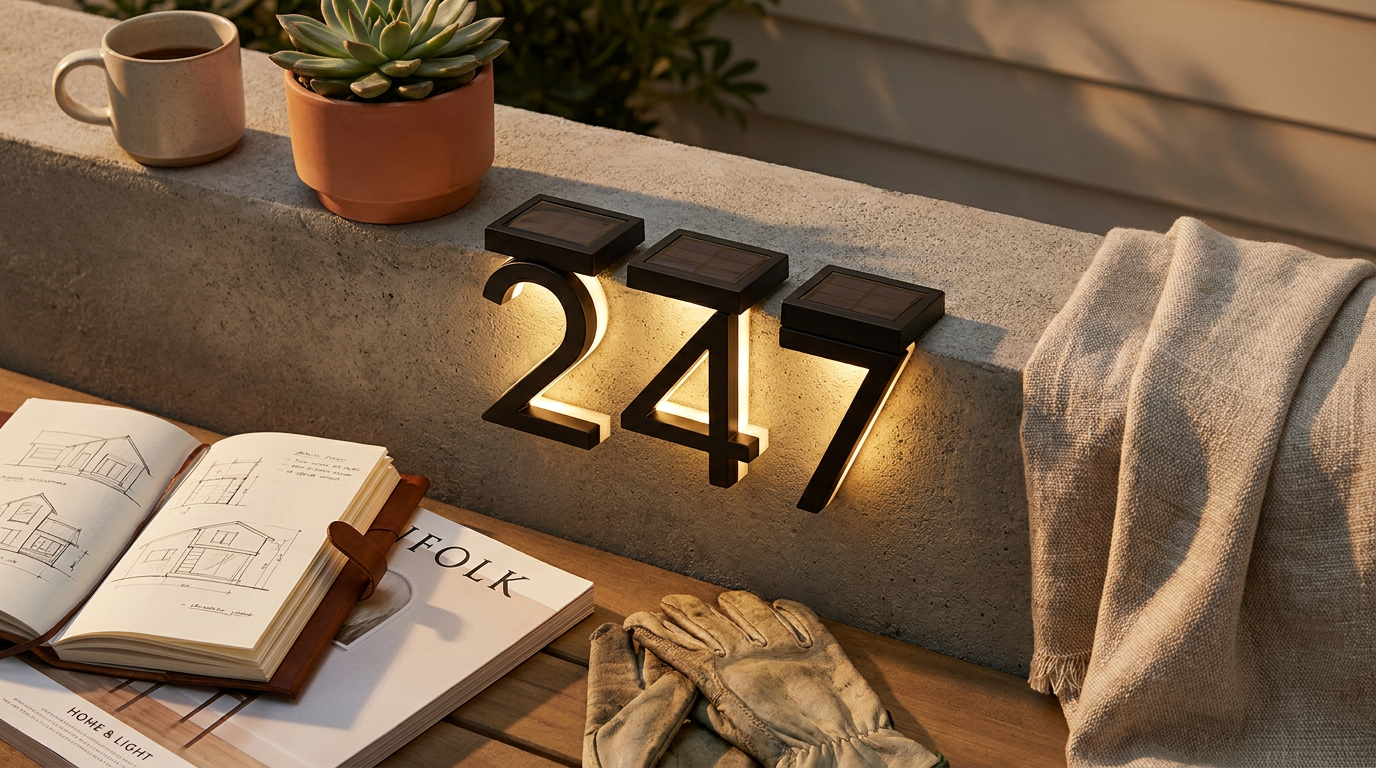
Solar Lighted House Numbers for Modern Curb Visibility
 Sam VasquezBuying Guide Lead
June 20, 2026. This guide explores the technical and aesthetic advantages of using backlit technology in residential address displays. It is written for homeowners looking to balance modern architectural design with the practical necessity of 24/7 visibility for guests and emergency services.
The Visibility Gap in Residential Wayfinding
Standard house numbers often fail the basic test of visibility after sunset. Traditional physical numbers rely on ambient street lighting or a porch lamp, which rarely provides enough contrast for a delivery driver or an ambulance searching for a specific address. According to Selegna Signs, modern backlit LED house numbers are designed specifically to bridge this gap by providing high visibility both day and night through high-contrast illumination. However, the primary friction point for many homeowners is the electrical work required for hardwired systems. Running low-voltage wiring through an exterior wall is a significant project that often requires a professional electrician and interior drywall repair. This is where solar integration becomes a practical necessity rather than just an eco-friendly choice.
When you look at the landscape of backlit house numbers solar options, the market is split between cheap plastic housings and durable aluminum frames. If you're on a budget, you might be tempted by the generic $15 units found at big-box retailers, but these typically lack the battery capacity to stay lit through a cloudy winter night. In my experience, the cheaper units also use lower-quality adhesive for the numbers themselves, leading to peeling after a single season of rain or snow. For those prioritizing a solar address plaque for yard placement, the challenge is finding a unit that can withstand direct ground moisture while maintaining a charge from limited sunlight. Skip this if you have a North-facing wall that is permanently shaded by large trees; solar technology, regardless of the brand, requires a minimum of four to six hours of direct light to function reliably through the night.
Technical Standards for Solar Backlit Displays
Photo by Kim Lawrie on Pexels
Solar Lighted House Numbers address these common failure points by utilizing high-efficiency monocrystalline solar panels and lithium-ion storage. Unlike older nickel-cadmium batteries, lithium-ion cells handle the frequent charge-discharge cycles of a solar powered number light for curb much more effectively. The hardware design is centered on the "floating" aesthetic, where the numbers sit slightly off the backplate. This allows the LED light to spill out from behind the digit, creating a halo effect that is significantly easier to read from a distance than a direct-glow front-lit sign. The led solar address plaque typically features a dusk-to-dawn sensor that automates the lighting cycle, ensuring the battery isn't wasted during daylight hours.
Between the two most common designs—the horizontal plaque and the individual floating digits—I’d go with the integrated plaque for most suburban homes. It provides a more contained weather-sealed environment for the electronics. For instance, the Dual-Lit Solar House Numbers available at BacklitLEDsign offer a waterproof LED address plaque with a dusk-to-dawn sensor for approximately $35.00, which serves as a benchmark for what a mid-range, reliable unit should cost. These units are built to withstand heavy rain (IP65 rating) and use high-output LEDs that don't dim as the battery drains throughout the night. If you are looking for illuminated house numbers solar powered that actually last more than one season, you need to look for these specific hardware specs: an aluminum or stainless steel frame and a high-capacity mAh battery rating.
Choosing the Right Backlit Configuration
Photo by suzukii xingfu on Pexels
Selecting a backlit house numbers solar setup requires more than just picking a font. You need to consider the mounting surface and the distance from the street. A solar address sign for yard use needs a different mounting bracket than one intended for a brick facade. If you are mounting to a fence or a mailbox, weight becomes a factor. Here is what I’d actually buy: a unit with a separate, adjustable solar panel if your house numbers are located under a porch eave. This allows you to place the numbers in the shade while the panel catches the sun on the roofline or a nearby post.
When evaluating your options, use this decision framework:
- Lumen Output: Look for a minimum of 10-20 lumens per digit for clear visibility from 50 feet.
- Battery Chemistry: Prioritize Lithium-ion (Li-ion) or Lithium Iron Phosphate (LiFePO4) over Ni-MH for longevity.
- Color Temperature: 3000K (warm white) is generally better for residential aesthetics, while 6000K (cool white) offers higher contrast for modern homes.
- Installation Method: Ensure the kit includes a template; as shown in installation tutorials by Daveystruggle on TikTok, a proper template is the difference between a professional look and crooked numbers.
- Weather Rating: Do not buy anything rated below IP65 if it will be fully exposed to the elements.
Shop Solar Lighted House Numbers here.