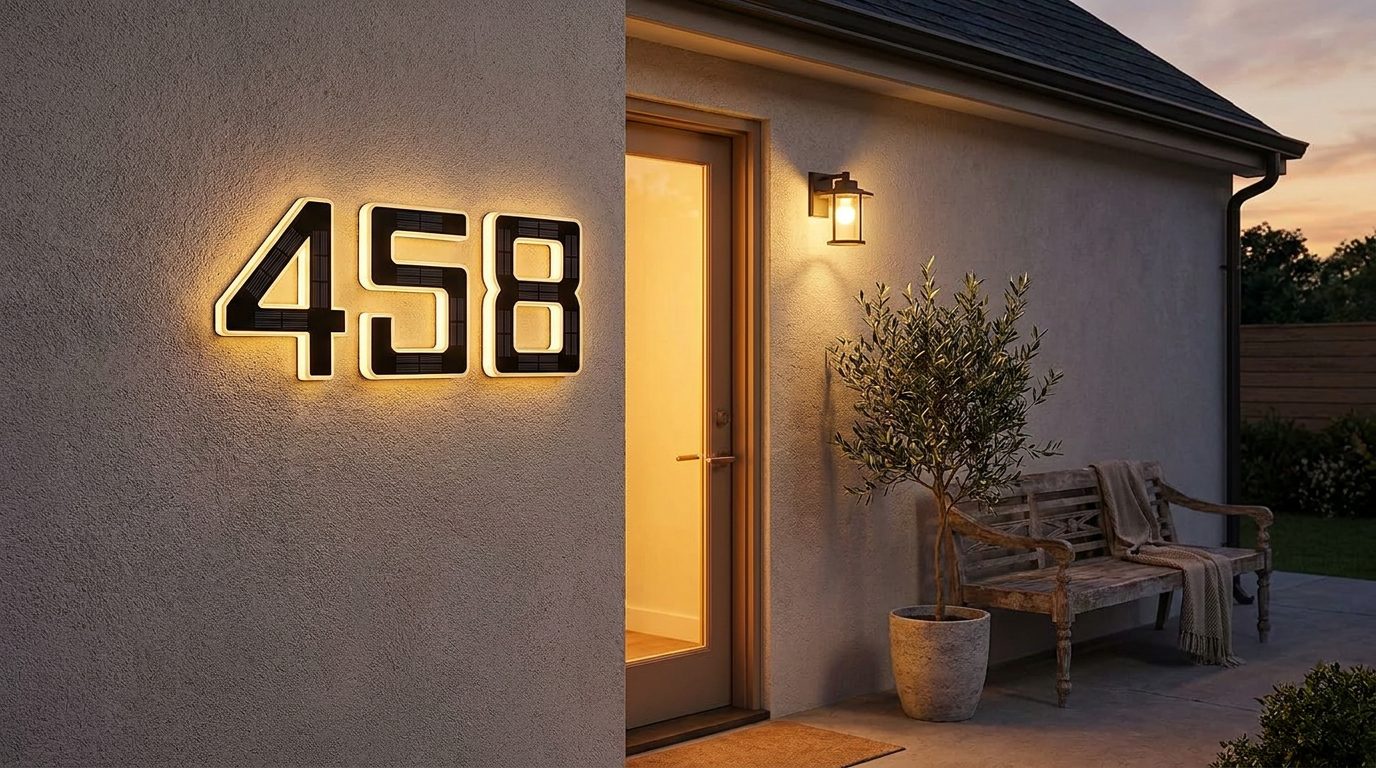
How Long Do Solar Lighted House Numbers & Their Batteries Last?
 Maya ChenContributing Editor
A Solar Lighted House Number offers a brilliant combination of modern design, safety, and eco-friendly technology. With no complex wiring, it’s an elegant solution for ensuring your home is visible after dark. But as a savvy homeowner, you’re likely asking a critical question: how long will the LED house numbers and their solar battery actually last? The longevity of these fixtures depends on three core components: the rechargeable battery, the LED lights, and the durability of the housing itself. A high-quality unit is an investment in your home's curb appeal and safety, designed to perform reliably for years.
This guide breaks down the expected lifespan of each component, explores the factors that influence their performance, and provides tips to help you get the most out of your solar address sign.
Understanding the Lifespan of a Solar Battery
The heart of any solar-powered device is its rechargeable battery. For most Solar Lighted House Numbers, the internal battery is the component with the shortest lifespan, typically lasting two to three years before its ability to hold a full charge begins to diminish. These systems generally use either Nickel-Metal Hydride (NiMH) or Lithium-ion (Li-ion) batteries, which are designed for hundreds of charge-and-discharge cycles.
- Charge Cycles: A typical solar battery is rated for 500-1,000 cycles. Since it charges daily and discharges nightly, it completes about 365 cycles per year. After 2-3 years, you may notice the illumination time shortening, especially during winter.
- Replaceability: Crucially, high-quality solar address plaques are designed with replaceable batteries. This means you don't have to replace the entire fixture. A simple battery swap can restore your sign to peak performance, allowing the housing and LED components to remain in service for a decade or more.
How Long Do the Integrated LEDs Last?
Photo by Duy's House of Photo on Pexels
The LED lights in modern solar address signs are exceptionally durable. Most are rated for 50,000 hours of use. To put that in perspective, if your house numbers are illuminated for 12 hours every night, they run for 4,380 hours per year. At that rate, the LEDs could theoretically last over 11 years, far outliving the battery and even the solar panel itself.
Because of this incredible longevity, the LEDs are typically integrated and sealed directly into the waterproof housing. This protects the sensitive electronics from moisture and dust, ensuring a high IP (Ingress Protection) rating and preventing premature failure. This is why they are a superior choice when considering different types of light up house numbers for outside.
Key Factors That Influence Longevity
Several environmental and material factors can impact the performance and lifespan of your LED house numbers' solar battery and other components.
Sunlight Exposure and Geographic Location
For optimal battery charging, the integrated solar panel needs at least 6-8 hours of direct sunlight each day. South-facing installations are ideal in the Northern Hemisphere. While high-sensitivity monocrystalline cells can still generate a charge on overcast days, consistent low-light conditions will result in shorter nightly illumination times and can strain the battery over the long term.Weather, Temperature, and Seasonality
Extreme temperatures can affect battery performance. According to the U.S. Department of Energy, cold weather slows the chemical reactions inside a battery, temporarily reducing its capacity. During winter, shorter daylight hours combined with cold temperatures mean your sign may not stay lit from dusk until dawn. To mitigate this, ensure the solar panel is kept clear of snow and debris.Material Quality and Weatherproofing
Durability is directly tied to the quality of the materials. Fixtures made from architectural-grade acrylic, powder-coated aluminum, and stainless steel are built to withstand UV exposure, rain, and temperature fluctuations without warping or degrading. The sleek aesthetic of floating solar house numbers black often incorporates these robust materials, which protect the internal circuitry and battery from moisture damage, a common cause of premature failure.How to Maximize the Life of Your Solar House Numbers
By understanding these factors, you can ensure your Solar Lighted House Numbers remain a bright, reliable, and stylish feature of your home's exterior for many years.
Frequently Asked Questions
Photo by Unggul Budi on Pexels
How do solar house numbers work during a power outage?
Because Solar Lighted House Numbers operate on a self-contained circuit with their own solar panel and battery, they are completely independent of the electrical grid. They remain fully illuminated during a power outage, making them an invaluable safety feature. This ensures your address is clearly visible for deliveries, guests, and most importantly, serves as a reliable beacon for emergency responder house signs solar when seconds count.Are the batteries in Solar Lighted House Numbers replaceable?
Yes, in most high-quality models, the rechargeable batteries are designed to be user-replaceable. This is a critical feature for long-term sustainability, as the battery is the component most likely to degrade over time. By simply swapping in a new battery every 2-3 years, you can extend the functional life of the entire fixture to a decade or more, making it a cost-effective and environmentally friendly choice.