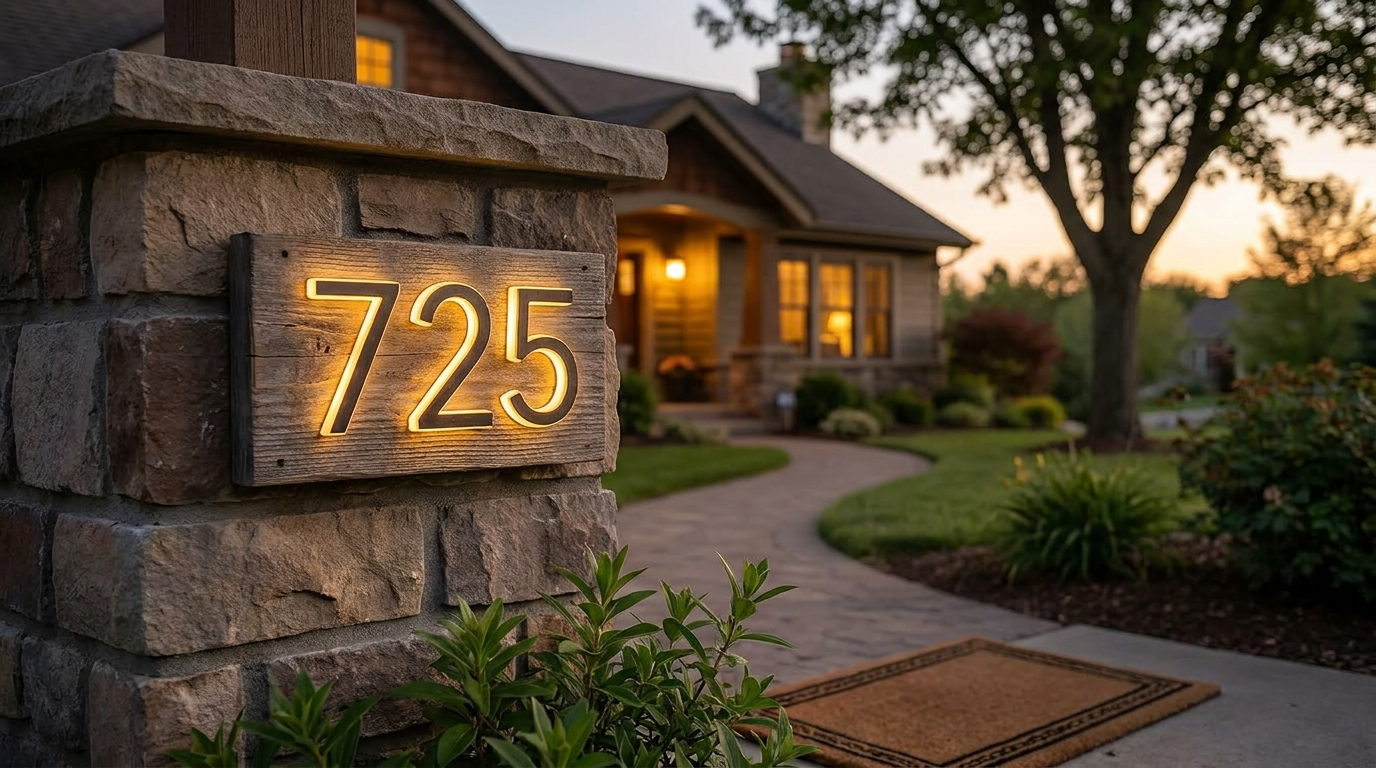
How Solar Powered House Numbers Keep Your Home Visible
 Sam VasquezBuying Guide Lead
Finding a home after dark is a challenge for delivery drivers, friends, and first responders. Solar Lighted House Numbers fix this by providing a reliable, self-sufficient way to display your address. These systems harness sunlight to ensure visibility every night without wiring or electricity costs.
The Technology Inside: Core Components of Solar Lighted House Numbers
At their core, illuminated house numbers solar powered systems are efficient, durable devices. Four essential parts work together to light your address:
- Photovoltaic (Solar) Panel: This captures photons and converts them into DC electricity. High-quality models use monocrystalline panels for better efficiency, even on overcast days. According to the U.S. Department of Energy, this is a reliable way to generate power for off-grid lighting.
- Rechargeable Battery: Acts as a reservoir for generated power. Most units use lithium-ion (Li-ion) or NiMH batteries for long cycle life.
- Light Emitting Diodes (LEDs): LEDs are energy-efficient and bright. They often last 50,000+ hours, eliminating bulb replacements.
- Photocell Sensor (Dusk-to-Dawn Sensor): This light-sensitive resistor detects ambient light levels. It triggers the LEDs at sunset and switches them off at sunrise to begin the charging cycle.
The 24-Hour Cycle: From Sunlight to Bright Numbers
Photo by Star Zhang on Pexels
Operation is a self-sustaining cycle requiring no manual intervention:
Built for the Elements: Durability and Weather Resistance
Illuminated house numbers solar powered devices must withstand year-round weather. Reputable models use UV-stabilized ABS plastic, stainless steel, and acrylic to prevent rust or cracking.
Most feature a high Ingress Protection (IP) rating, typically IP65. This means the enclosure is dust-tight and protected against low-pressure water. This durability is critical for emergency responders who need to locate your home without delay.
Simple Installation for Maximum Visibility
Photo by Mehmet Kaya on Pexels
Since they are wireless, you don't need an electrician. Installation involves mounting a bracket with screws onto a surface receiving adequate sunlight.
Mount the unit on a south-facing surface (in the Northern Hemisphere) for best results. Avoid placement under deep eaves or dense trees. These units can be installed on siding, brick, fences, or mailboxes. Clear visibility is especially helpful for enhancing safety for seniors receiving home care or deliveries.
Frequently Asked Questions
Do solar house numbers work in winter or on cloudy days? Yes. Modern panels can generate a charge from indirect sunlight. runtime may be slightly reduced, but a well-placed unit will remain lit for most of the night.
How long do Solar Lighted House Numbers stay lit at night? A full charge usually provides 8 to 12 hours of illumination, covering the period from dusk until dawn.
What does an IP65 rating mean for an address sign? The '6' means it is dust-tight, and the '5' means it is protected against water jets. It is built to withstand heavy rain and snow.