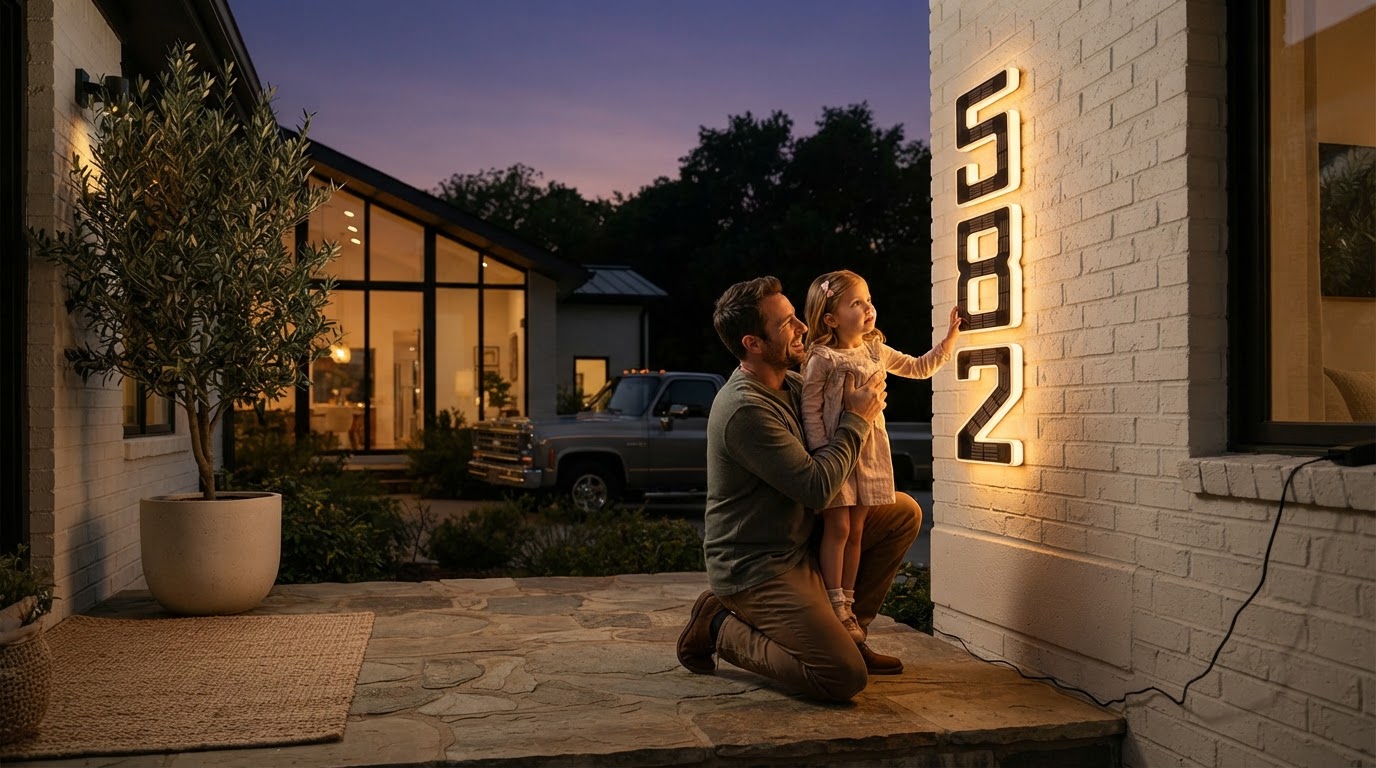
Configuring Dusk to Dawn Solar Lighted House Numbers
 Jordan HaleStaff Writer
November 25, 2026 — The shift toward automated home exteriors has reached the curb, as Solar Lighted House Numbers equipped with dusk-to-dawn sensors become the standard for modern residential navigation.
Standing on my porch as the sun dipped below the tree line, the first thing I noticed was how the ambient light sensor reacted to the transition, triggering a soft, steady glow without a single manual flick of a switch. This automation is more than a convenience; it is a critical safety feature that ensures emergency responders and delivery drivers can identify a home the moment visibility drops. According to product specifications from BacklitLEDsign, these units utilize integrated photocells to manage power consumption, activating the LED array only when environmental light levels fall below a specific threshold.
The 4-Step Sensor Setup
Optimizing a dusk-to-dawn system requires more than just mounting a plaque; it requires a strategic understanding of light placement. The internal circuitry of these Solar Lighted House Numbers relies on a cadmium sulfide (CdS) photocell, which measures the resistance created by incoming photons. To ensure the system triggers correctly, the solar panel must be positioned at an angle that avoids the 'flicker effect' caused by nearby streetlights or porch lamps. If the sensor detects artificial light, it may incorrectly assume it is still daytime, leaving your address in the dark. For those utilizing led solar house numbers for wall, the ideal placement is an unobstructed south-facing surface that receives at least six hours of direct sunlight. While many entry-level units, such as those found on Etsy, offer a 5-inch vertical profile with a single LED digit, high-performance models feature an IP44 or higher waterproof rating to protect the sensor from humidity and moisture ingress. During my own installation, I found that wiping the sensor lens with a microfiber cloth every two weeks significantly improved the trigger sensitivity. The internal rechargeable batteries are typically rated for 8 to 10 hours of runtime, meaning a well-placed weatherproof solar address plaque for wall will stay illuminated until the first light of morning resets the cycle.
Expert tip: If your address sign seems to dim prematurely, it turns out the culprit is often 'light pollution' from a nearby window. Shifting the unit just six inches away from interior light spill can prevent the sensor from toggling off during the night.
Integrating these automated units into your exterior design provides a seamless look, especially when paired with other light up house numbers for outside. Ensuring that your light up house numbers for outside are visible from the street is the final step in a successful setup. Proper calibration between the solar collector and the dusk-to-dawn sensor ensures your home remains a beacon for anyone searching for your coordinates after dark.
Shop Solar Lighted House Numbers.
Sources
- Dual-Lit Solar House Numbers – Waterproof LED Address Plaque with Dusk-to-Dawn Sensor, Easy Install
- Solar House Numbers for Outside, IP44 Waterproof Dusk-to-Dawn White
- Address Numbers Dusk to Dawn