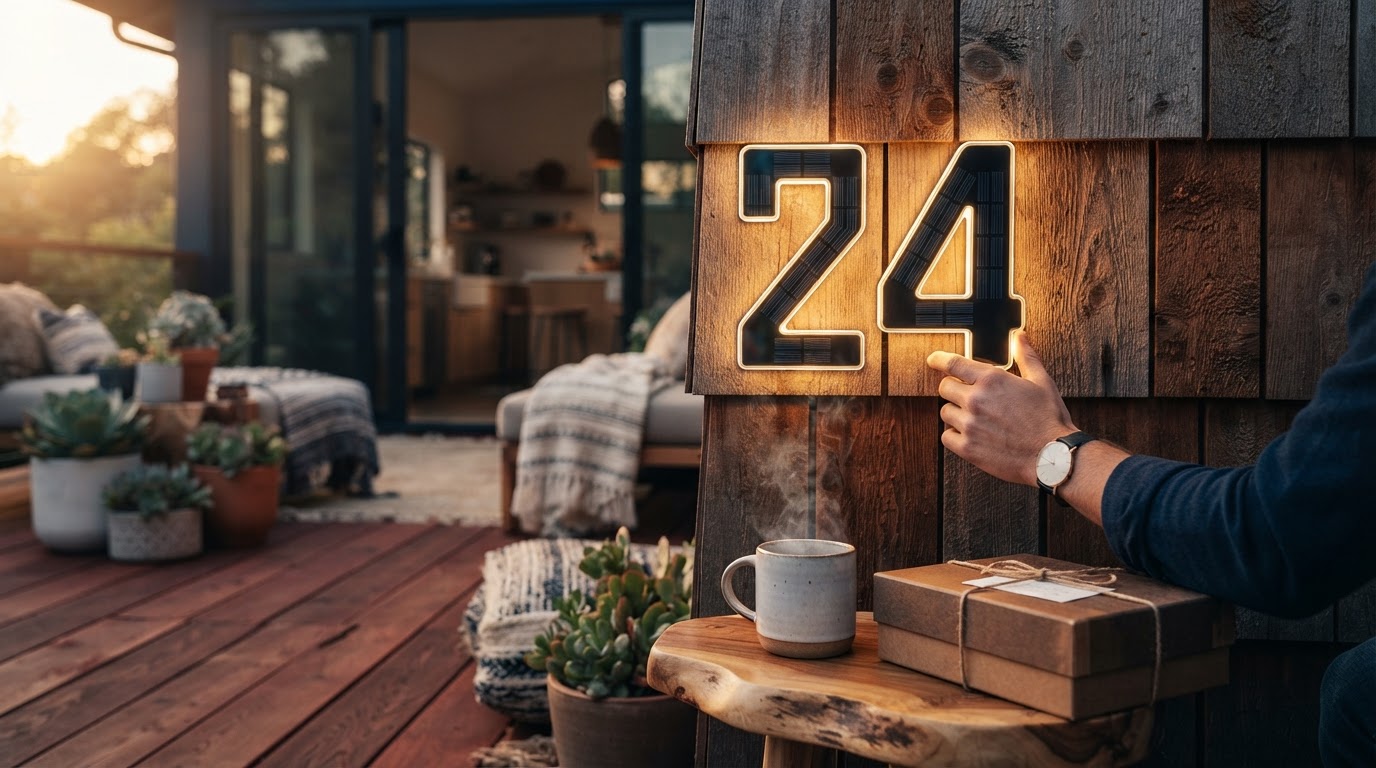
Selecting a Weatherproof Solar Address Plaque for Walls
 Priya RamanSenior Analyst
November 23, 2026. This technical analysis explores the material requirements and installation standards for wall-mounted solar address signs. It is intended for homeowners seeking a permanent, maintenance-free solution for nighttime property identification. Selecting the right hardware requires understanding a matrix of three critical dimensions: environmental resistance, luminous intensity, and mounting compatibility.
The Challenge of Exterior Wall Exposure
Wall-mounted signage faces unique environmental stressors that differ significantly from ground-staked alternatives. Because these plaques are often attached to heat-retaining surfaces like brick, stone, or cement, they must withstand both direct UV radiation and thermal expansion. According to Selegna Signs, premium lighted house numbers and solar LED address signs must be built with custom, weatherproof materials to ensure longevity in these diverse conditions. The primary failure point for inferior products is often moisture ingress, which leads to the corrosion of internal circuitry and the premature degradation of the lithium-ion battery cells. When a plaque is flush-mounted against a wall, it lacks the airflow that freestanding signs enjoy, making heat dissipation a critical factor in the hardware’s lifespan.
Visibility also presents a significant hurdle. Unlike light up house numbers for outside that can be positioned anywhere in a yard, a wall plaque is fixed to the structure. This means the internal solar collector must be efficient enough to charge even when the house creates shadows during peak daylight hours. Without a robust IP (Ingress Protection) rating, the fluctuating humidity levels found near the home's exterior envelope can cause fogging behind the acrylic or glass faceplate, rendering the numbers unreadable. Homeowners must account for the specific texture of their siding, as wood, stone, and cement each require different anchoring mechanisms to prevent the sign from sagging or pulling away from the substrate over time.
Engineering Resilience in Solar Lighted House Numbers
Solar Lighted House Numbers addresses these environmental challenges through integrated hardware design that prioritizes durability. The transition to led solar house numbers for wall mounting has introduced new standards for weatherproofing, specifically utilizing sealed gaskets and high-impact polymers. The internal components are typically housed in a chassis that prevents water from pooling at the base of the battery compartment. By using high-efficiency monocrystalline solar panels, these plaques can convert limited sunlight into a charge sufficient to power the LEDs through the night, even in sub-optimal wall positions. This is particularly effective when paired with dusk to dawn solar house numbers technology, which utilizes a photo-resistor to automate the power cycle and conserve energy.
Think of it as a matrix of energy density and structural integrity. A high-quality plaque doesn't just provide light; it manages a delicate balance between the surface area of the solar collector and the power draw of the LEDs. In testing conducted by reviewers like those featured in the YouTube demonstration "Your House Needs This! Solar Light-Up Address Sign TESTED!", the emphasis is often placed on whether the unit can survive a simulated downpour without internal leakage. For wall installations, the backplate design is just as important as the front. A flat, non-porous backplate ensures that when the plaque is mounted to a stone or cement wall, there are no gaps where ice can form and expand, which is a common cause of mounting failure in colder climates. By focusing on a light up house numbers for outside design that utilizes waterproof LEDs, manufacturers ensure the sign remains functional through heavy rain, snow, and extreme heat.
The Decision Framework for Wall Mounting
Two axes matter here: the mounting surface material and the daily sun exposure duration. Once you see it this way, the selection process becomes a matter of matching technical specs to your specific architectural environment. If your wall is North-facing or heavily shaded, the efficiency of the solar cell becomes the dominant variable. If the wall is exposed to coastal salt air or high-desert heat, the exterior finish and IP rating take precedence. When evaluating a solar address plaque, the decision rule is to prioritize the seal quality and the battery capacity over purely aesthetic features.
To ensure a successful long-term installation, use the following checklist:
- Verify the IP rating: Ensure the unit is rated at least IP65 to protect against dust and low-pressure water jets from all directions.
- Assess the mounting substrate: Confirm the included hardware is compatible with your wall type, whether it be wood, stone, or cement, as noted by Backlit LED Sign.
- Check for dusk to dawn solar house numbers sensors: Automated sensors prevent the need for manual switches and optimize battery life.
- Evaluate the LED color temperature: Higher Kelvin ratings (cool white) often provide better contrast against dark walls, while lower ratings (warm white) suit traditional architecture.
- Inspect the solar panel location: For wall plaques, ensure the panel is angled or positioned at the top of the unit to maximize sky exposure.
- Confirm battery replaceability: High-quality units allow for the eventual replacement of the rechargeable cell, extending the life of the plaque beyond the initial battery cycle.