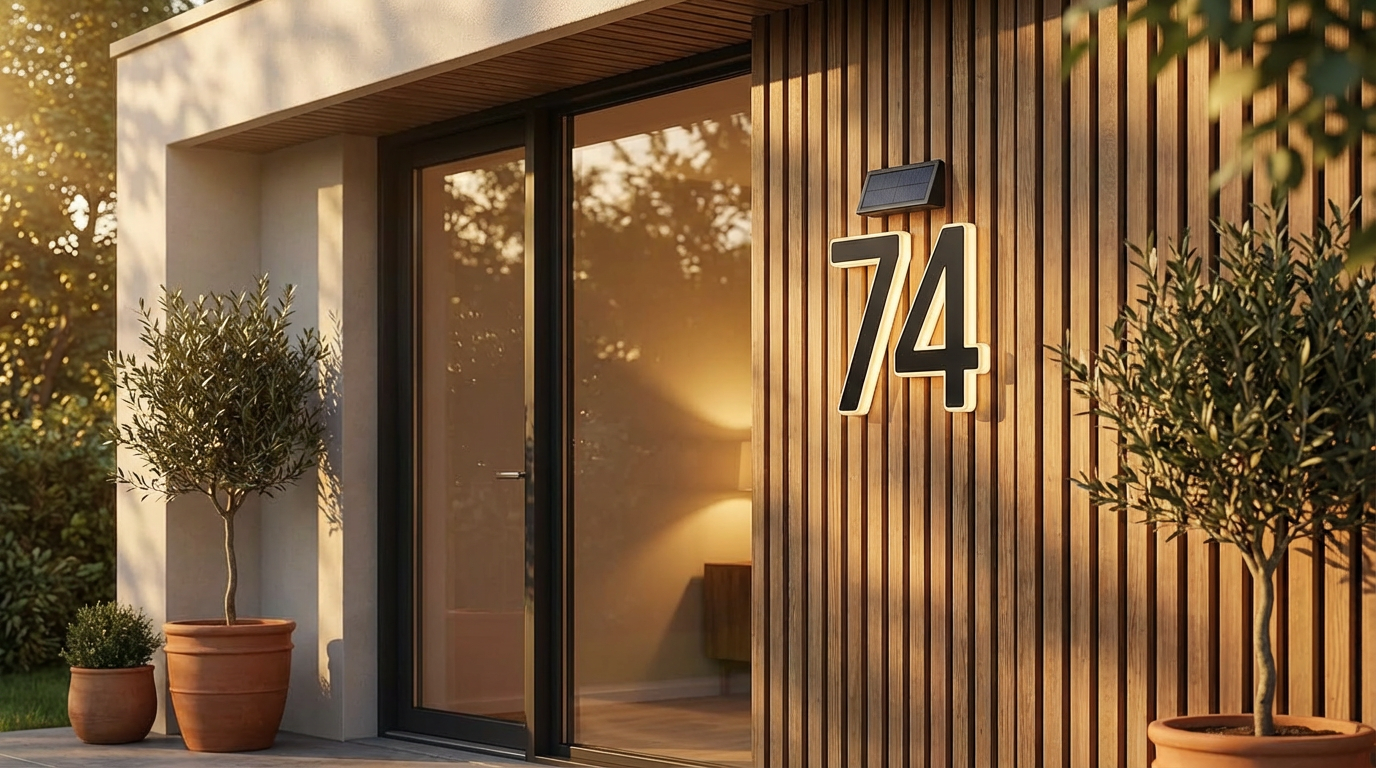
Choosing Solar Lighted House Numbers for Your Home
 Daniel OkaforField Tester
Choosing solar lighted house numbers is a practical upgrade for curb appeal and nighttime safety. This guide breaks down the essential features to consider for high-quality, long-term address visibility.
The Core Technology: How Solar Numbers Work
Solar lighted house numbers are self-sufficient devices. Each unit contains a solar panel, a rechargeable battery, and LEDs. During the day, the panel converts sunlight into energy stored in the battery. At dusk, a photocell sensor automatically turns on the LEDs. A quality unit typically provides 8-12 hours of light from a full charge. This wire-free operation is one of the key eco-friendly and economical benefits of solar house numbers.
Performance and Durability: The Most Critical Factors
Photo by Marcelo Chagas on Pexels
Look closely at these technical specifications to ensure reliable nightly performance.
- Battery Type and Capacity: Lithium-ion (Li-ion) or Lithium Iron Phosphate (LiFePO4) batteries are premium choices, offering longer lifespans than older Nickel-Metal Hydride (Ni-MH) types. Check if the battery is replaceable; if not, the entire unit must be discarded when the battery fails.
- Solar Panel Quality: Monocrystalline panels are more efficient than polycrystalline ones, generating more power on overcast days. A larger panel ensures a more reliable charge.
- Brightness and Legibility: Look for products with multiple LEDs. Numbers should be 4-6 inches tall to be read clearly from the street by guests and emergency services.
- Weather Resistance (IP Rating): Choose materials like powder-coated aluminum or UV-resistant acrylic. An IP44 rating protects from splashing water, while an IP65 rating ensures the unit is dust-tight and can withstand water jets in harsher climates.
Design and Aesthetics: Complementing Your Home's Style
Consider how these design elements integrate with your architecture.
- Font and Finish: Modern sans-serif fonts suit contemporary homes, while serif styles fit traditional architecture. Match finishes like matte black or brushed nickel to your existing exterior hardware.
- Lighting Style: 'Backlit' models create a halo effect against the wall, while 'Front-lit' models illuminate the numbers through a translucent faceplate for sharp visibility.
- Color Temperature: Warm white (2700K-3000K) produces a cozy glow, while cool white (4000K-5000K) offers a modern blue-white look. Match the color of your existing outdoor lighting for cohesion.
Installation and Placement for Optimal Charging
Proper placement is crucial for solar battery health.
- Sunlight is Essential: The solar panel requires 6-8 hours of direct sunlight. A south-facing wall is ideal in the Northern Hemisphere. Avoid shadows from roof eaves or trees.
- Mounting and Visibility: Most units include hardware for DIY wall mounting. The U.S. Fire Administration notes that clearly visible address numbers are critical for first responders. Visible numbers can also enhance home security with solar house numbers.
Frequently Asked Questions

Photo by Jimmy Liao on Pexels
How long do solar lighted house numbers last?
Housing and LEDs often last 5-10 years. The rechargeable battery typically requires replacement every 2-4 years. Choosing a model with a replaceable battery is the most sustainable option.
What if my solar house numbers don't light up?
Ensure the power switch is 'on' and the solar panel is free of dust or debris. If the panel is in the shade, move it to a sunnier spot. If these steps fail, the battery may need replacement.
Making the Right Choice
By prioritizing battery quality, weather resistance, and legibility, you can find the perfect fit for your home. For a full overview of styles, see our ultimate guide to solar house numbers.